


ARTICLE 119: COFFEE — FROM SOCIAL PRACTICE TO CULTURAL SYMBOL
From a simple beverage and traded commodity, coffee has evolved into a cultural symbol and a philosophy of life — reflecting the identity, values, and way of living of people within society.
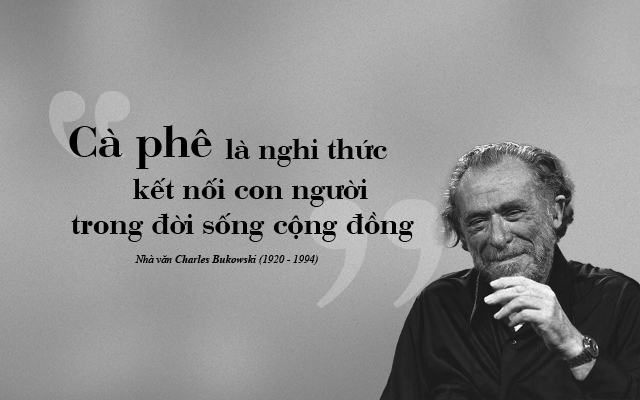
“Coffee is a ritual that connects people within community life.” — Writer Charles Bukowski (1920–1994)
Coffee – A Social Practice
Since ancient times, humanity has shown a deep interest in the study of food, beverages, and spices through the lenses of medicine and philosophy. By the 20th century, food studies had emerged as an independent academic field. From the perspective of structural anthropology, Claude Lévi-Strauss argued that food is not merely a means of sustenance, but also a medium of meaning and a system of cultural symbols through which the distinctive identity of a community can be understood.
In everyday life, when culinary activities become intertwined with communication, codes of conduct, and shared rituals maintained collectively within a community, they evolve into social practices that help preserve cultural values and shape communal identity. In this sense, coffee — initially a beverage valued for its energizing qualities — gradually entered social life and, together with its modes of appreciation, brewing techniques, and distinctive rituals passed down through generations, became a social practice deeply connected to the cultural life and identity of many communities and nations.
In Ethiopia, the birthplace of coffee, coffee has long served not only as a beverage that energizes the body, awakens the mind, and stimulates intellectual clarity, but also as a precious medicinal substance used to promote health and healing. Most notably, the traditional coffee ceremony — held three times a day — functions as a central social event within village life, providing a dedicated time for conversations about community affairs, politics, and everyday life. Hosting a coffee ceremony at home to welcome friends and honored guests is also an important expression of respect and social connection in Ethiopian culture. Every aspect of the ceremony is carried out with meticulous care and solemnity: from the setting, timing, and attire of the host, to the utensils, coffee beans, water, and the entire preparation process — including roasting, grinding, pounding, brewing, and the manner in which the coffee is ultimately enjoyed.
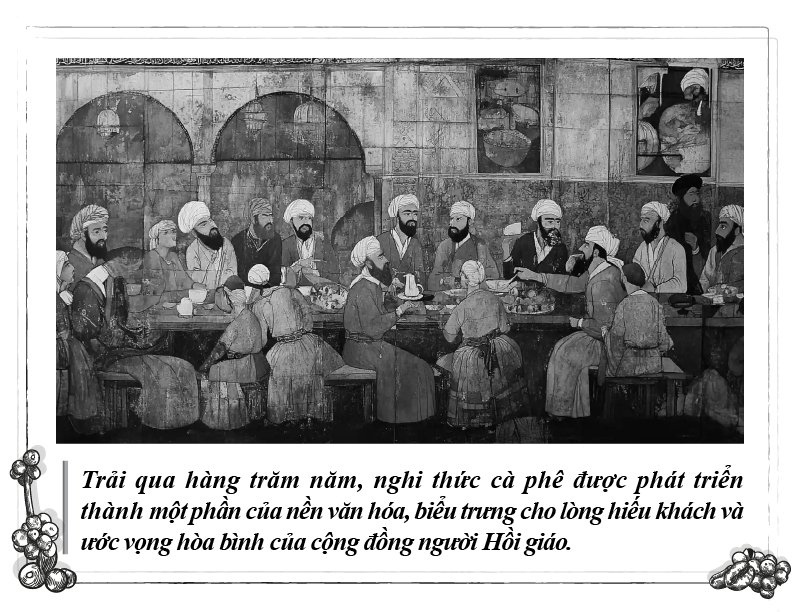
Over the course of centuries, the coffee ceremony evolved into an integral part of cultural life, symbolizing hospitality and the aspiration for peace within Muslim communities.
In the secular life of the Islamic world, the coffee ceremony became a symbol of hospitality, generosity, and the aspiration for peace. In Arab culture, during the ritual of welcoming guests, the host carefully selects the coffee ingredients, performs the brewing rituals with solemnity, and offers prayers to Allah before sharing coffee together within the Majlis — a special gathering space for exchanging knowledge and discussing family and community affairs. Each guest is traditionally served three cups of coffee. The first cup, al-dhaif, represents peace. The second, al-kaif, signifies the establishment of friendship. The third, al-saif, symbolizes loyalty and protection.
When coffee arrived in Europe, it evolved from a beverage of awakening into an integral part of European social life. Coffee and coffeehouses gave rise to distinctive social spaces where intellectual dialogue, community interaction, and the creation of cultural and ideological values flourished, influencing many dimensions of society. Within these coffeehouses, codes of conduct, social norms, and standards of service gradually took shape. At the same time, different nations developed their own unique coffee cultures and styles of appreciation, closely tied to their cultural identities and aspirations for national expression. Italian espresso, for example, came to symbolize the refined, artistic, and civilized spirit of Italy. In France, coffeehouses became emblematic of intellectual life and spaces for the expression of individual identity. In Vienna, meanwhile, coffee and café culture emerged as symbols of sophistication and knowledge. As a result, coffee drinking evolved into a social practice — one associated with rational thought, creative spirit, intellectual life, and humanity’s enduring aspiration to transform the world and shape civilization.
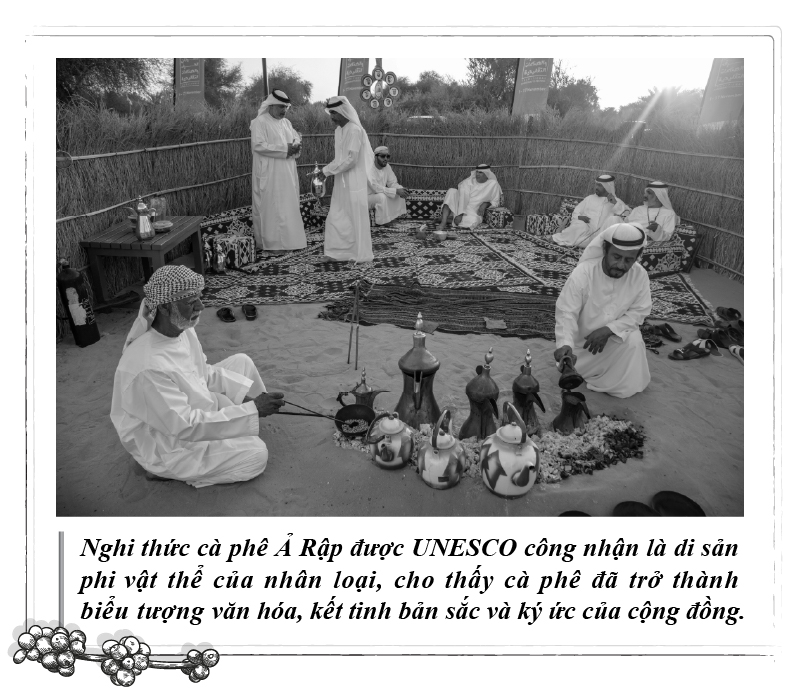
The Arab coffee ceremony has been recognized by UNESCO as an Intangible Cultural Heritage of Humanity, affirming that coffee has evolved into a cultural symbol embodying the identity, memory, and shared values of entire communities.
A social practice that is continuously preserved, deeply connected to collective memory, and embraced by a community as part of its identity eventually becomes cultural heritage. In this sense, many coffee traditions have been recognized by UNESCO as Intangible Cultural Heritage, notably Turkish coffee culture, Viennese coffeehouse culture, and the Arab coffee ceremony. In Vietnam, “Dak Lak Coffee Cultivation and Processing Knowledge” has been officially recognized by the Ministry of Culture, Sports and Tourism as a National Intangible Cultural Heritage, honoring the indigenous knowledge system of coffee cultivation and processing passed down through generations in the Central Highlands. Such recognition further reinforces coffee’s role beyond that of a mere beverage, elevating it into a system of cultural symbols that reflects collective values, shared memory, and community identity.
Cultural Symbol and Philosophy of Life
If coffee is understood as a social practice within community life, then through the processes of trade and globalization, it has also become a significant element of consumer culture. Shaped through commercial exchange and socially embedded consumption practices, consumer culture reflects the ways in which people choose, use, and assign meaning to goods within social life. Sociologist Pierre Bourdieu argued that consumption serves not only to satisfy material needs, but also as a means through which individuals express taste and define their social position.
From its earliest emergence through the Age of Enlightenment, coffee and coffeehouses served as sources of creative inspiration and intellectual vitality, while also becoming spaces for the exchange of ideas where individuals could gather, debate, and disseminate new ways of thinking. As a result, coffee consumption became closely associated with intellectual life and the spirit of rational inquiry, evolving into a symbol of humanity’s aspiration for knowledge and social progress.
The transition from modern to postmodern society in the 20th century brought profound transformations in social consciousness. People increasingly began seeking personal identity and meaning in existence through the choices they make in everyday life. In this context, coffee came to be understood not merely as a material commodity, but as a symbolically charged cultural object — a medium through which individuals express their lifestyle, value system, and social identity.
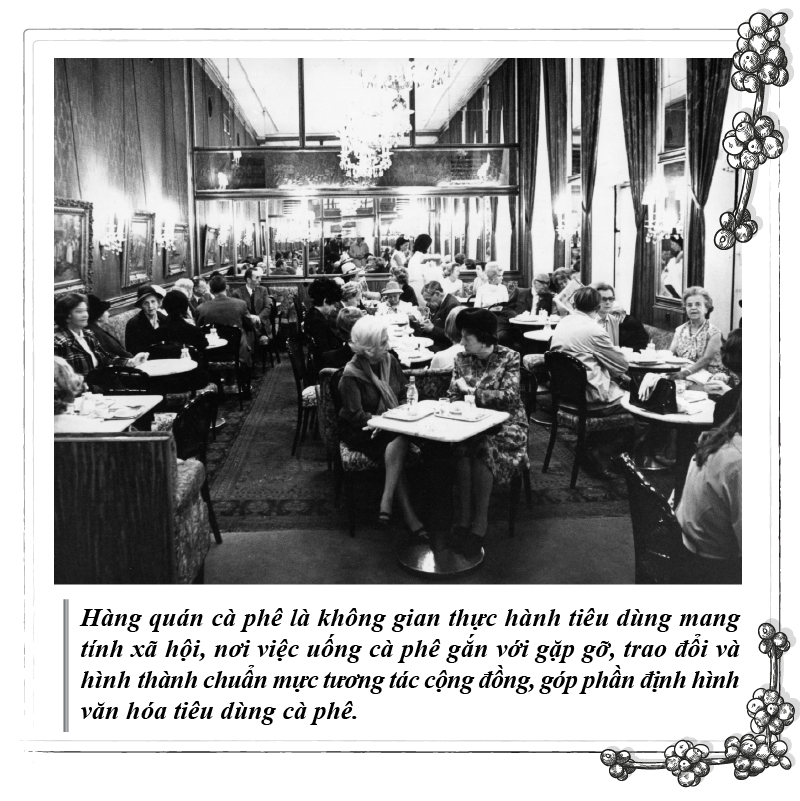
Coffeehouses are social spaces of consumption where drinking coffee is closely intertwined with meeting, conversation, and the formation of communal norms of interaction — thereby contributing to the shaping of coffee consumption culture.
In the early 20th century, amid the rise of fast-paced lifestyles and the growing emphasis on convenience, instant coffee emerged to meet new consumer demands. By the late 20th century, the rise of Specialty Coffee further redefined the value system surrounding coffee consumption. Coffee was no longer viewed merely as an essential product, but increasingly became an object of knowledge, aesthetics, and experience. From a basic commodity, coffee was elevated into a carefully curated product associated with rigorous standards of quality, craftsmanship, and sensory appreciation.
From this evolution, various coffee appreciation trends emerged, each reflecting distinct systems of values and personal tastes. Espresso Mi Cultura emphasized coffee as a medium for expressing individual cultural identity. Gourmet coffee catered to discerning consumers who valued deep knowledge of coffee varieties, growing regions, and brewing techniques. Capsule coffee, meanwhile, projected an image of affluence and sophisticated living. At the same time, coffee brands increasingly operated as symbols of lifestyle and personal philosophy. General Foods International Coffee (the USA) portrayed coffee as a luxurious product associated with wealth and prestige. Meanwhile, Gloria Jean’s Coffees (Australia) developed an integrated coffee culture experience — from carefully selected beans to every cup served — guided by its “Good Cup” philosophy of making life progressively better.
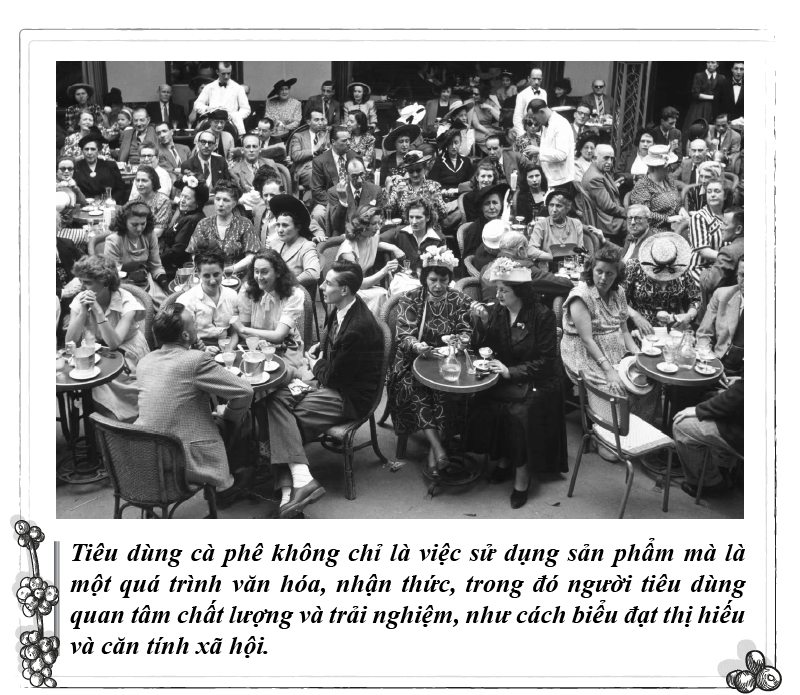
Coffee consumption is no longer merely the use of a product, but a cultural and cognitive process in which consumers value quality and experience as expressions of personal taste and social identity.
Most notably, within the broader landscape of the global coffee industry, coffee in Vietnam has long transcended the boundaries of an everyday beverage to become a vibrant cultural symbol of Vietnamese life. Unlike the speed and intensity of espresso, the elaborate rituals of Turkish coffee, or the convenience of instant coffee, Vietnamese coffee culture is distinguished by the slow-drip phin filter method — a practice that symbolizes the philosophy of pause and reflection, forming a uniquely distinctive cultural identity.
Many Vietnamese coffee brands have made significant efforts to convey stories of cultural identity and philosophy through their products and coffee appreciation spaces. Among them, Trung Nguyên Legend has been recognized as a pioneering brand that has helped “enrich the identity and open pathways of knowledge and philosophy for Vietnamese coffee” on the global stage.
Building upon and advancing the heritage values of Vietnamese coffee culture, Trung Nguyên Legend — after extensive research into the global history of coffee civilizations — has distilled the essence of three iconic coffee civilizations: Ottoman, Roman, and Thiền (Meditation). These influences have been transformed into distinctive “coffee products,” “coffee experiences,” and ultimately, a unique “coffee lifestyle.” Most notably, the philosophy of The Tao of Coffee originating from Vietnam — enlightened and creatively developed by Trung Nguyên Legend Group Founder and Chairman Dang Le Nguyen Vu — seeks to awaken human consciousness and inspire people to collectively cultivate a new way of living oriented toward true prosperity and genuine happiness. Today, this philosophy continues to spread across the world.
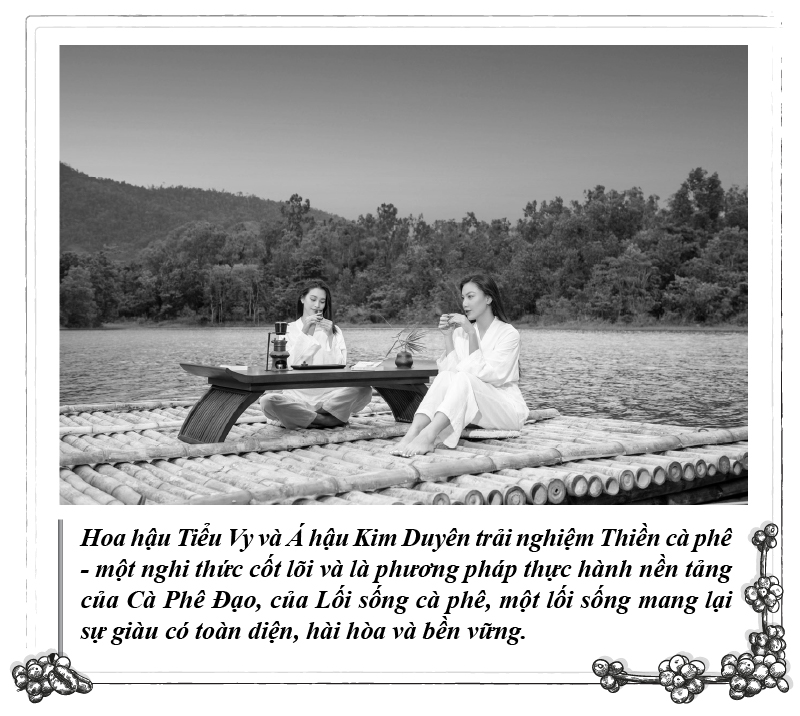
Miss Vietnam Tiểu Vy and First Runner-up Kim Duyên experience Coffee Meditation — a core ritual and foundational practice of The Tao of Coffee and the Lifestyle of Coffee, a way of living that aspires toward holistic, harmonious, and sustainable prosperity.
It can be seen that the symbolic meanings associated with coffee are continuously shaped and redefined through social contexts and everyday life. Coffee’s journey — from a social practice to a cultural symbol and ultimately a philosophy of life — reveals how it has become a medium through which people express their worldview, establish social connections, and articulate their understanding of life itself. In this sense, coffee not only reflects the cultural identity of nations, but also helps inspire humanistic values, guiding people toward a more civilized, mindful, and fulfilling way of life.
Coming Next: Coffee and Social Models