


Article 121: Coffeehouses – Spaces where aesthetic thought flourishes
Coffeehouses are distinctive cultural spaces that have contributed to the development of aesthetics and the spread of humanistic values, guiding humanity towards Truth – Goodness – Beauty.
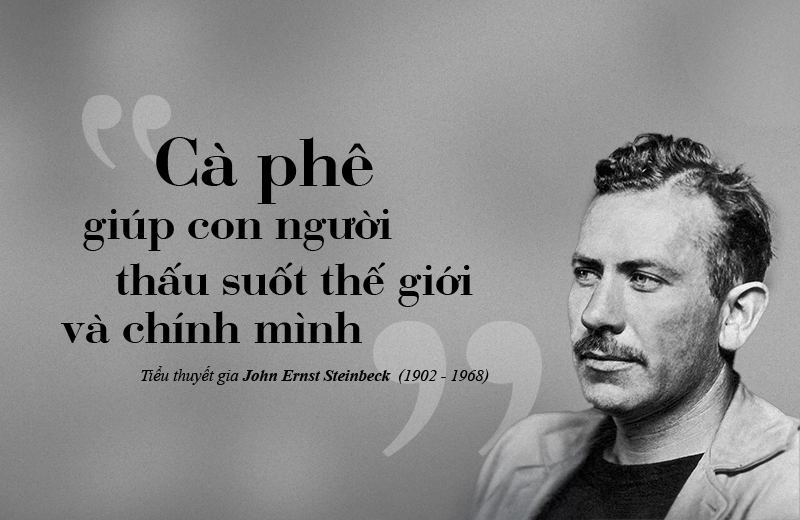
“Coffee helps people gain a deeper understanding of the world and of themselves.” – Novelist John Ernst Steinbeck (1902–1968)
Aesthetics and Humanity’s Journey to Understanding Beauty
Aesthetics is the study of the nature of beauty and of the human capacity to perceive, appreciate, evaluate, and create beauty in nature, social life, and the arts. Since antiquity, questions concerning beauty and aesthetic experience have attracted the attention of philosophers such as Plato and Aristotle. At that time, however, aesthetics existed only as a branch of philosophy.
In the 18th century, against the backdrop of the Enlightenment—with its emphasis on reason, freedom of thought, and the central role of human beings in understanding and transforming the world—there was a growing need for a systematic explanation of the nature of beauty and aesthetic experience. In 1735, the German philosopher Alexander Gottlieb Baumgarten first used the term aesthetics in his work Meditationes Philosophicae de Nonnullis ad Poema Pertinentibus to designate the field concerned with sensory perception and beauty. Later, in Aesthetica (1750), Baumgarten systematised his ideas on sensory cognition and beauty, helping to establish aesthetics as an independent field of study.
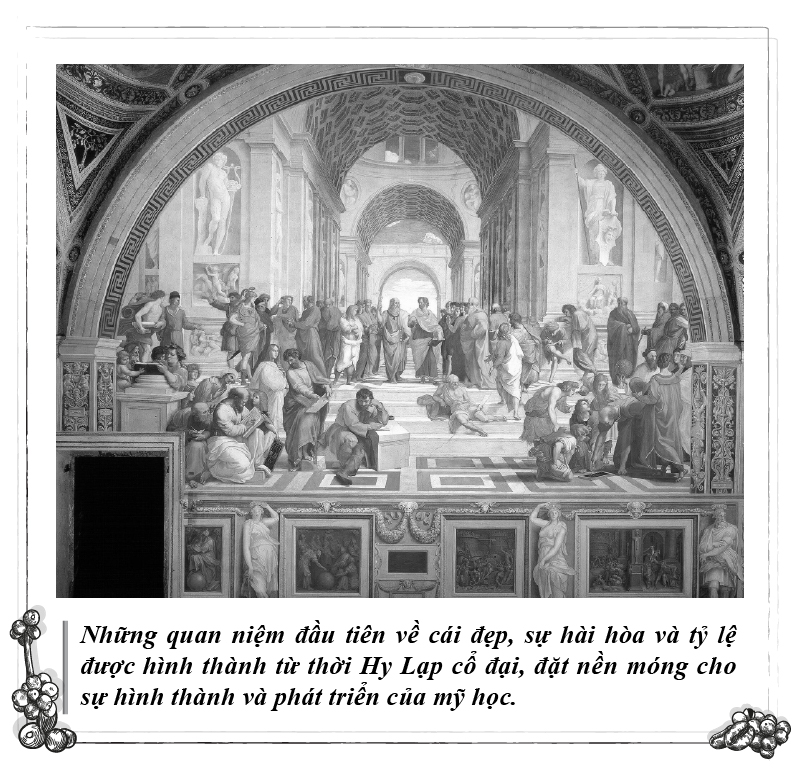
The earliest concepts of beauty, harmony, and proportion emerged in ancient Greece, laying the foundations for the formation and development of aesthetics.
Since then, aesthetics has continued to evolve through diverse schools of thought and approaches. Immanuel Kant laid the foundations of German classical aesthetics through his studies of aesthetic judgement and beauty; Georg Wilhelm Friedrich Hegel developed a dialectical idealist aesthetics, viewing art as a form through which the human spirit expresses itself; and Karl Marx and Friedrich Engels laid the foundations of Marxist aesthetics, emphasising the relationship between art, social life, and historical practice. The development of these schools of thought helped refine the theoretical foundations of aesthetics, establishing it as an important field within modern philosophy and the social sciences.
Importantly, aesthetics does not exist in isolation but is closely connected with many aspects of social life. It intersects with philosophy in exploring human existence and spiritual values; with psychology in studying emotions, perception, and aesthetic needs; and with the arts in the creation, appreciation, and evaluation of beauty. Aesthetics is also closely linked to culture, education, and sociology in shaping aesthetic taste, preserving cultural values, and enriching human spiritual life. Above all, aesthetics helps individuals progressively cultivate their character and aspire towards the values of Truth – Goodness – Beauty.
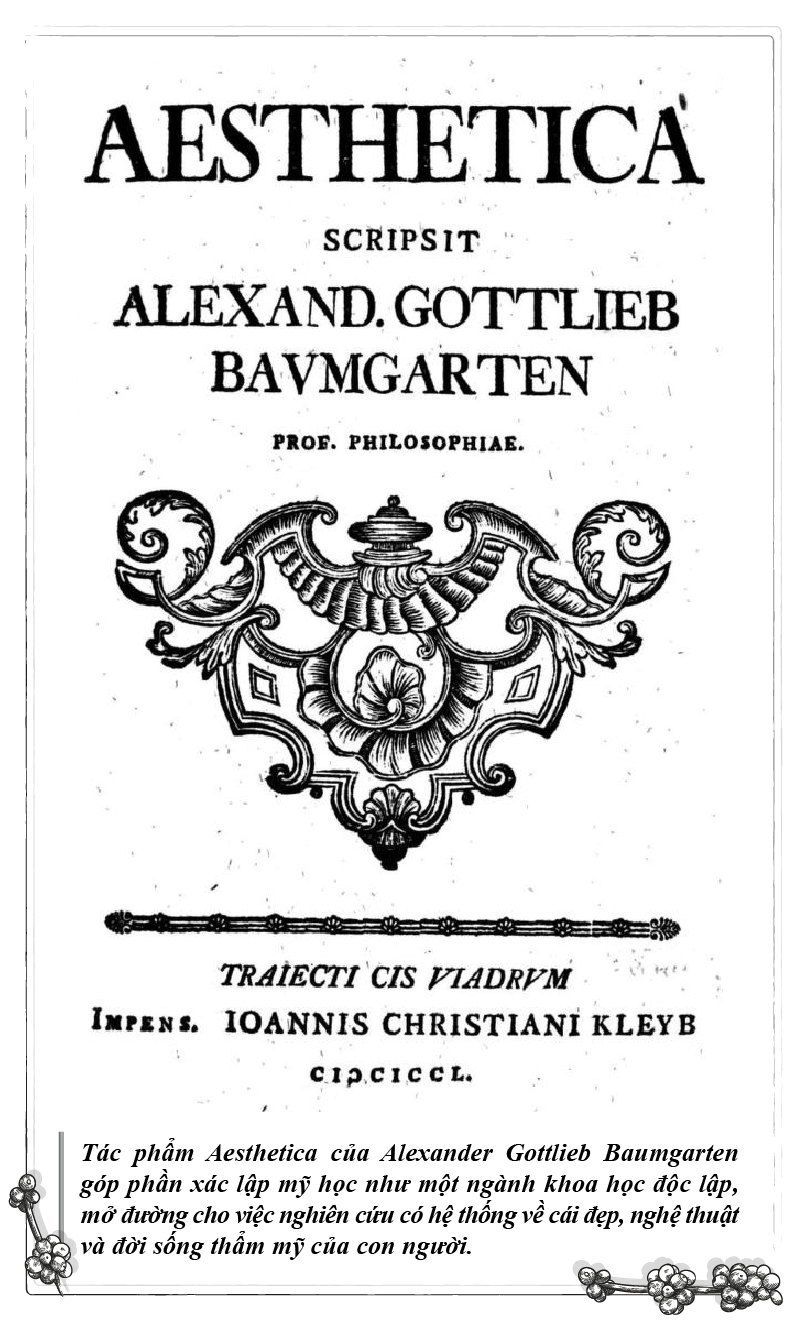
Alexander Gottlieb Baumgarten’s Aesthetica helped establish aesthetics as an independent field of study, paving the way for the systematic study of beauty, art, and human aesthetic experience.
The Influence of Coffeehouses on the Formation of Aesthetic Values
Before aesthetics was established as an independent field of study, for centuries, concepts of art and beauty were explored primarily within aristocratic circles, academies, and specialised cultural institutions. By the 18th century, alongside the spirit of the Enlightenment, the flourishing of Europe’s free and open coffeehouse culture helped bring ideas and values concerning aesthetics and beauty to a much wider public, gradually making them an integral part of social and cultural life.
As distinctive public spaces for the free exchange of ideas and creative expression, European coffeehouses of the time fostered vibrant intellectual environments. Most notably, Café Procope in Paris became an important centre of intellectual life, attracting numerous scholars, philosophers, writers, and artists. Closely associated with the intellectual community surrounding Café Procope, Denis Diderot (1713–1784)—the eminent French writer, philosopher, and art critic—developed key aesthetic concepts concerning beauty and art through works such as Treatise on the Beautiful (1752) and his series of Salon critiques. Through these works, Diderot helped bring questions of beauty and art beyond the confines of aristocratic and scholarly circles and into broader public discourse. In doing so, he also helped lay the foundations for modern critical aesthetics and a culture of public art criticism.
Diderot’s ideas on aesthetics remain relevant today and have been compiled, edited, and introduced by Professor Phùng Văn Tửu in the anthology From Aesthetics to the Forms of Art. The volume is part of the Life-Changing Foundational Bookshelf, a collection thoughtfully curated by Đặng Lê Nguyên Vũ, Founder and Chairman of Trung Nguyên Legend Group, with the aim of disseminating foundational knowledge of aesthetics and the arts.
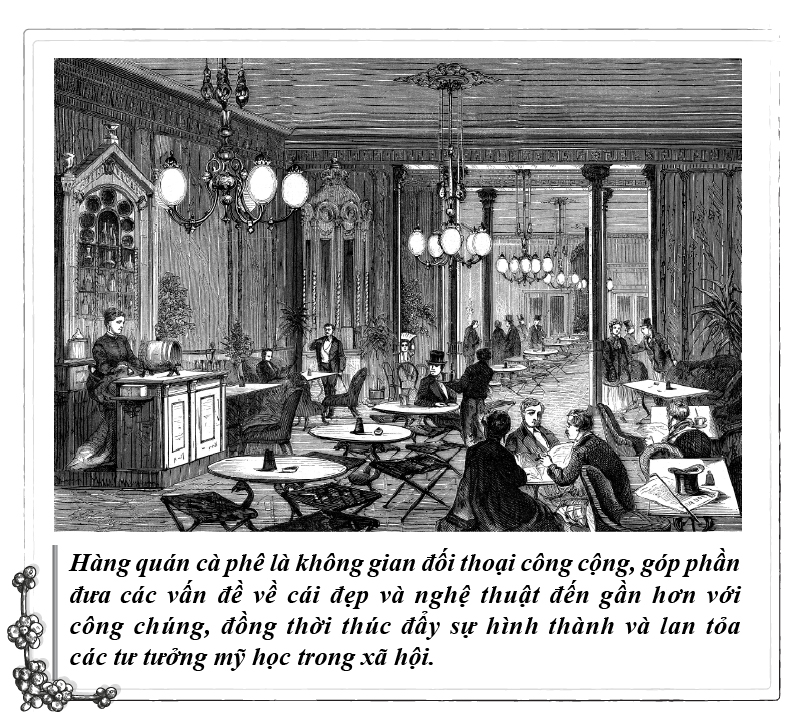
Coffeehouses serve as spaces for public dialogue, bringing questions of beauty and art closer to the wider public while fostering the development and dissemination of aesthetic thought throughout society.
Coffeehouses also fostered the transformation of ideas about beauty and art in modern aesthetics. During the 19th and 20th centuries, Viennese coffeehouses such as Café Central, Café Griensteidl, and Café Museum became forums for pioneering artists, architects, and intellectuals, including Gustav Klimt, Hermann Bahr, Oskar Kokoschka, and Adolf Loos. Through conversations on art, architecture, and culture, new aesthetic ideas emerged and spread. Architect Adolf Loos championed authenticity, functionality, and simplicity in design, while renowned artists Gustav Klimt and Oskar Kokoschka emphasised emotion, symbolism, creative freedom, and the inner life. These ideas helped shape modern aesthetics, broadening the understanding of beauty beyond formal harmony to encompass experience, emotion, and the relationship between art and human life.
At the same time, coffeehouses became spaces where aesthetic values found expression in everyday life. In Vienna, Café Museum embodied an aesthetic philosophy centred on authenticity, functionality, and simplicity. In Venice, Caffè Florian promoted contemporary artistic trends through exhibitions associated with the Venice Biennale, the renowned international cultural exhibition. In Paris, Café Guerbois served as a gathering place where Impressionist painters exchanged ideas, created, and presented their works, helping to advance new approaches to beauty in painting based on visual experience and subjective perception.
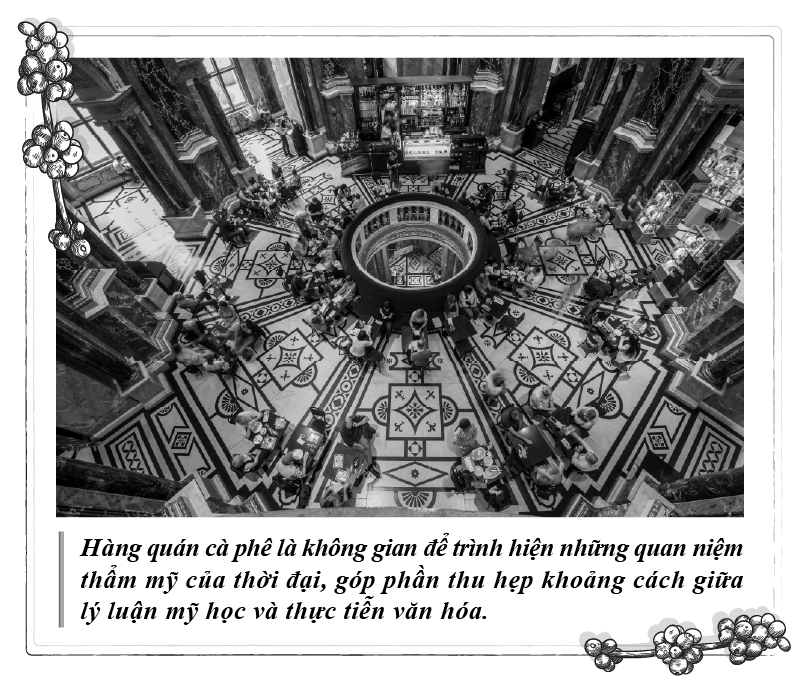
Coffeehouses are spaces where the aesthetic ideas of their time find expression, helping to bridge the gap between aesthetic theory and cultural practice.
In particular, during the 20th century, against the backdrop of wars and crises that profoundly transformed social consciousness, Parisian coffeehouses such as Café de Flore and Les Deux Magots became gathering places for writers, artists, and philosophers associated with existentialism, including Jean-Paul Sartre, Simone de Beauvoir, and Albert Camus. The conversations that took place in these spaces helped disseminate ideas about individual responsibility, the human capacity to create one’s own values, and self-development. These ideas broadened the scope of modern aesthetics by bringing inner life, individual experience, and humanistic values to the forefront of aesthetic experience, thereby contributing to the cultivation of character and the aspiration towards Truth – Goodness – Beauty.
In Vietnam, drawing on its extensive research into coffee, Trung Nguyên Legend Group has created distinctive, exceptional, and unique coffee appreciation spaces that artfully integrate coffee, culture, the arts, and lifestyle. These have been recognised as creative cultural spaces and described as an “important social hub” by the Financial Times (US). Spaces such as Trung Nguyên Legend Coffee World, Trung Nguyên Legend, Saturday Coffee, Creative Space, and especially the World Coffee Museum have been designed by Trung Nguyên Legend with distinctive architecture, bringing together the essence of the three coffee civilisations—Ottoman, Roman, and Zen—alongside a wide range of cultural activities. Together, they offer enriching experiences, enhance aesthetic appreciation and quality of life, and contribute to building a community that shares the values of Truth – Goodness – Beauty and embraces an Awakening Lifestyle.

Trung Nguyên Legend continuously innovates to elevate the value of Vietnamese coffee to the realms of culture, art, and ultimately a philosophy of life, contributing to the creation of an Awakening Lifestyle.
By providing a space where intellectuals could meet and engage in open dialogue, coffeehouses have not only fostered the emergence and dissemination of new ideas about beauty, art, and life, but have also become distinctive cultural institutions in the development of human civilisation. They have brought aesthetic values beyond the academic realm and closer to everyday social life, enriching people’s capacity to appreciate beauty and inspiring them to aspire towards the values of Truth – Goodness – Beauty.
Coming next: Coffee – Where Beauty Becomes a Way of Life