


Article 114: Coffee Tourism from the Perspective of Capitalization and Circularity
Coffee, by its very nature, embodies the history, memories, and philosophies of life shared by many communities around the world. When combined with ecotourism, it unfolds along two interconnected dimensions: circularity, which fosters sustainable development, and capitalization, which elevates coffee into a living heritage.
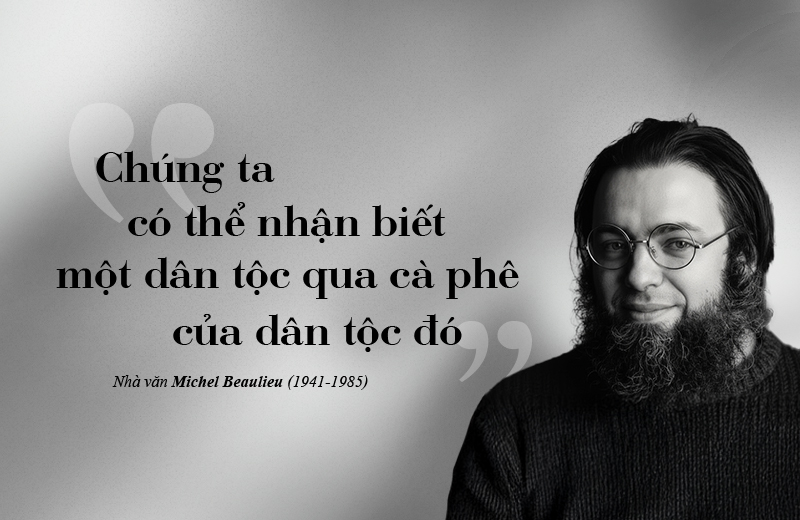
We can understand a nation through its coffee. – Writer Michel Beaulieu (1941–1985)
Circularity – From Material to Social Value
The circular model in coffee tourism operates on a closed-loop principle, encompassing both material sustainability and cultural value. Tourism generates economic momentum for cultural preservation, while preserved culture, in turn, becomes a compelling resource that enriches tourism.
Circularity in coffee tourism also extends to the circulation of knowledge, culture, and collective memory. Vast coffee plantations, stories of coffee passed down through generations, and traditional cultivation methods together form an invaluable cultural and ecological archive. Many nations have recognized this potential early on, positioning coffee as a pillar of their tourism industry.
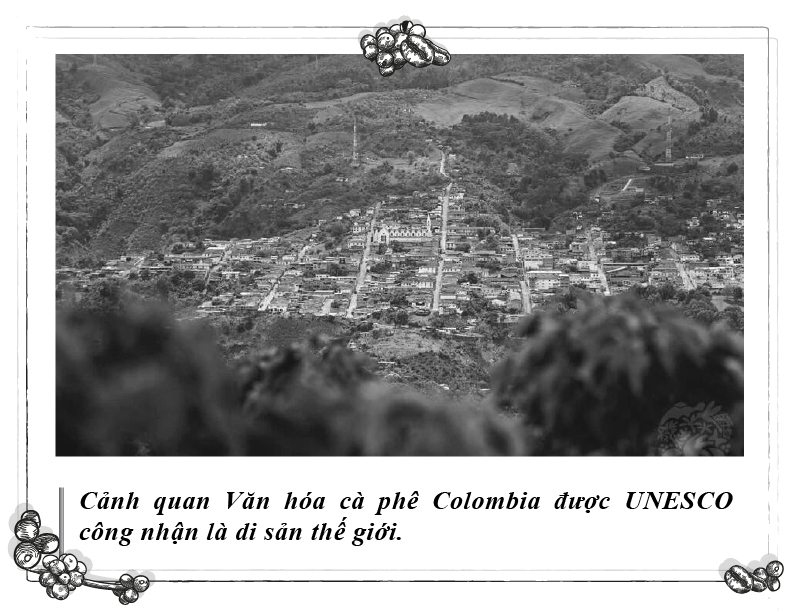
The Coffee Cultural Landscape of Colombia has been recognized by UNESCO as a World Heritage Site.
The Colombian Coffee Axis, encompassing numerous urban settlements and coffee farms, has been recognized by UNESCO as the Coffee Cultural Landscape, a World Heritage Site. It stands as a prime example of circularity between indigenous knowledge, cultural preservation, and ecotourism development. The coffee plantations spread across steep mountain slopes form a distinctive agricultural structure, while the traditional bahareque houses, the lifestyle of coffee farmers, and rituals and festivals surrounding coffee harvesting and production all create an immersive experience that blends entertainment, education, and culture. Visitors are invited into a holistic journey – not merely purchasing a product, but discovering an entire cultural narrative, from the coffee bean to the coffee way of life.
Similarly, Ethiopia – considered the birthplace of Arabica coffee – is home to the legendary tale of the goat herder Kaldi, who discovered the invigorating power of red coffee cherries. For centuries, coffee has been deeply woven into Ethiopia’s memory, rituals, and daily cultural practices. In the traditional coffee ceremony, beans are roasted, ground, and brewed on the spot using a clay pot known as jebena, then served in three rounds symbolizing connection, sharing, and blessing.
From a single coffee bean, Ethiopians have created an entire cycle of value: a beverage that begins in the home, transforms into a communal ritual, and extends into a unique tourism experience for international visitors. Many tours in regions such as Sidamo, Yirgacheffe, and Harrar combine visits to coffee farms with participation in these traditional ceremonies. Through this, local communities take an active role in developing tourism, while visitors are invited to immerse themselves in a vibrant, living cultural cycle.
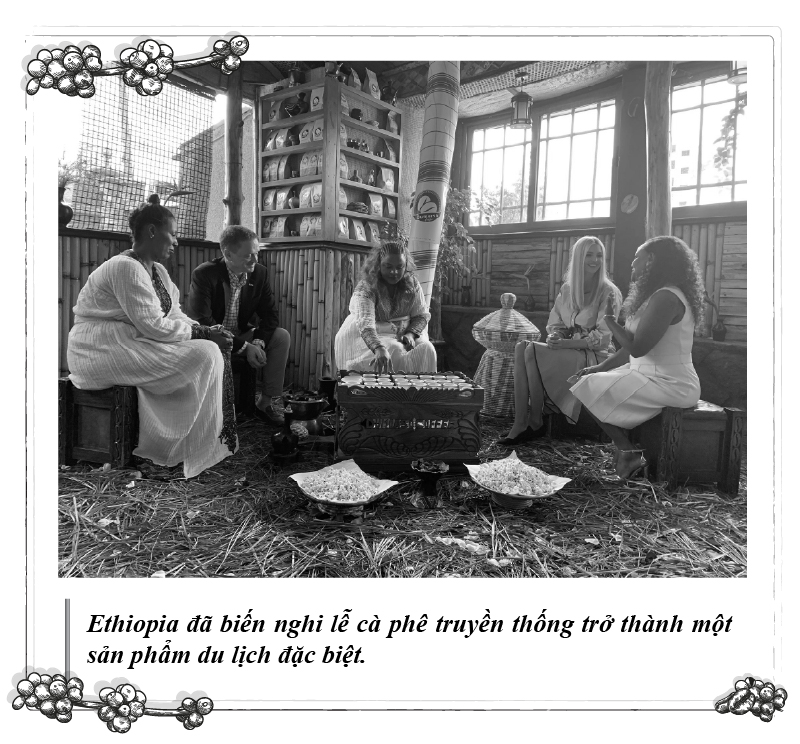
Ethiopia has transformed its traditional coffee ceremony into a unique and distinctive tourism experience.
The Coffee Cultural Landscape of Colombia welcomes millions of visitors each year, while coffee tourism in Ethiopia generates millions of U.S. dollars annually, demonstrating how community knowledge and collective memory, when integrated into tourism, can enhance economic value while preserving cultural identity. Here, the coffee bean transcends its role as a mere commodity to become the central element in the circular flow from material substance to social value.
Capitalization – Elevating Products into Cultural Heritage
If circularity creates a closed-loop system for sustainable development, then capitalization represents the process of elevating value, transforming both tangible and intangible assets into cultural symbols, diverse economic resources, and sources of collective pride.
In 2013, UNESCO recognized the Turkish Coffee Tradition as an Intangible Cultural Heritage of Humanity. This honor celebrated not only its distinctive brewing method but also the entire cultural and social value system surrounding the beverage. The Turkish people turned coffee drinking into an art, through unique preparation techniques, specialized utensils, rituals, and even fortune-telling with coffee grounds. Yet, what truly made Turkish coffee a heritage was not the recipe itself, but the communal traditions and social meanings it represents. Coffee symbolizes friendship, hospitality, and refinement, playing an essential role in major life events such as engagements, festivals, and religious celebrations. In literature, music, and folk art, coffee is praised as an integral part of the national identity.
Turkey has successfully capitalized on its coffee heritage through a comprehensive cultural strategy. The Istanbul Coffee Festival, established in 2014, is now one of Europe’s largest coffee festivals, attracting over 40,000 visitors annually. What began as a promotional event has evolved into a cultural brand—where coffee converges with performing arts and gastronomy, creating an integrated experience that embodies both economic value and cultural depth.
Coffee experience tourism has also flourished. In cities like Istanbul, Ankara, and Izmir, visitors are guided to historic coffeehouses such as Kurukahveci Mehmet Efendi (founded in 1871) to witness traditional roasting and grinding methods, enjoy coffee paired with local sweets like baklava or lokum, and even take part in coffee-ground fortune-telling sessions. Additionally, Turkey has established numerous coffee museums in key cities. The Kahve Müzesi in Karabük, the Kapadokya Kahve Müzesi in Cappadocia, and the Cappadocia Coffee Museum in Ajwa Cappadocia all showcase the history, brewing tools, and demonstrations of the cezve brewing technique, transforming museums into living spaces where heritage continues to thrive.
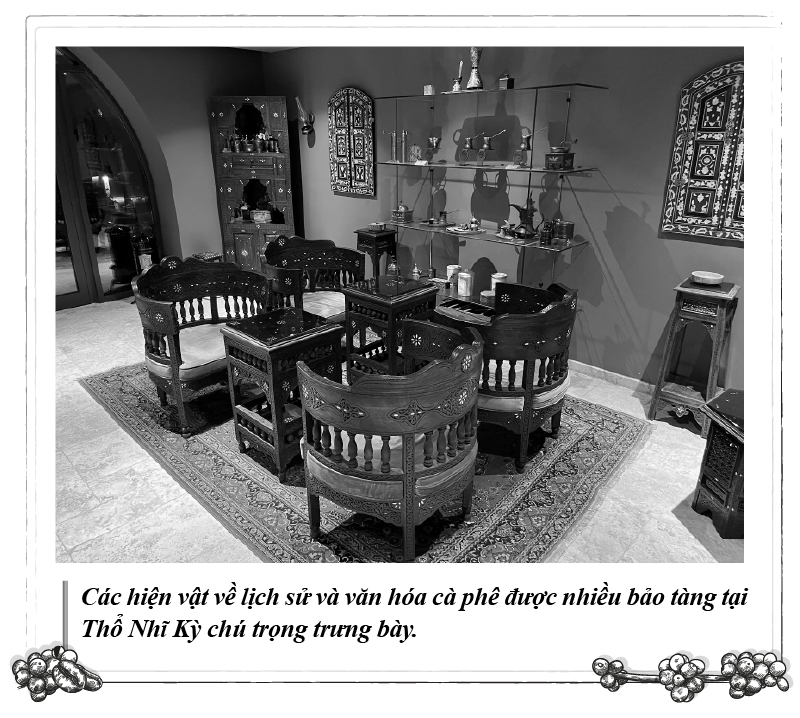
Artifacts reflecting the history and culture of coffee are prominently displayed in many museums across Turkey.
Across the world, many coffee regions are following this path of cultural capitalization, elevating the coffee bean from an agricultural product into a living symbol of cultural identity. The Fiestas de Calarcá Coffee Festival in Colombia, held since 1960, has become a cultural and tourism event closely associated with the Quindío coffee region. The Ljubljana Coffee Festival in Slovenia gathers roasters, baristas, and coffee enthusiasts from across Europe. In the United States, the Kona Coffee Cultural Festival in Hawaii, first launched in 1970, continues to be held annually.
In recent years, many coffee cities have made their mark through contemporary events such as the São Paulo Coffee Festival in Brazil, the Dubai Coffee Festival in the UAE, the Prague Coffee Festival in the Czech Republic, and the London Coffee Festival in the UK. UNESCO has also recognized several unique coffee-related rituals and cultural spaces around the world as Intangible Cultural Heritage of Humanity, including the Coffee Cultural Landscape of Colombia, the Turkish Coffee Culture and Tradition, the Arabic Coffee Ceremony, and the Viennese Coffee House Culture (Austria).
In Vietnam, Buôn Ma Thuột in Đắk Lắk Province, known as the “coffee capital”, is the country’s largest center for robusta coffee production and export. The region also preserves the Central Highlands cultural landscape, rich in harvest festivals and communal rituals. Since 2005, the Buôn Ma Thuột Coffee Festival has been held biennially, combining cultural and artistic performances, product exhibitions, thematic conferences, and hands-on coffee cultivation and processing experiences. Over time, the festival has evolved into a national cultural brand of international stature, positioning Buôn Ma Thuột as a “global coffee destination” that attracts visitors from around the world. In March 2025, Vietnam’s Ministry of Culture, Sports, and Tourism officially inscribed “The Knowledge of Coffee Cultivation and Processing in Đắk Lắk” into the National Intangible Cultural Heritage List. This recognition provides a foundation for Vietnamese coffee traditions – including cà phê sữa đá (iced milk coffee), phin coffee, and the coffee-growing region of Buôn Ma Thuột, Đắk Lắk – to be further proposed for inclusion in UNESCO’s list of Intangible Cultural Heritage of Humanity.
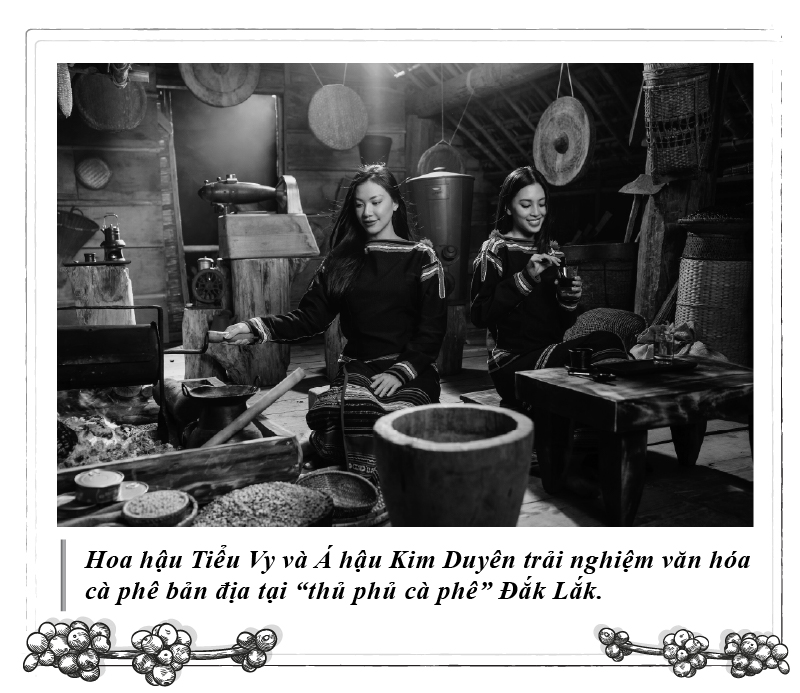
Miss Tiểu Vy and runner-up Kim Duyên experienced the local coffee culture in the “coffee capital” of Đắk Lắk.
At the same time, Trung Nguyên Legend, a pioneering enterprise founded in Đắk Lắk, has devoted itself to elevating coffee beyond a simple beverage, transforming it into a symbol of culture, art, spirit, and philosophy. Among its most remarkable contributions is the World Coffee Museum, an architectural and cultural landmark built by Trung Nguyên Legend in Buôn Ma Thuột, Đắk Lắk. Described by the Associated Press (AP) as “the largest, most dynamic, and most unique living coffee museum,” it has become an unmissable destination for visitors. With its distinctive architecture inspired by Central Highlands indigenous culture, the museum offers an exceptional experience that weaves together the local heritage and the global history of coffee. Housing over 10,000 artifacts, along with curated exhibitions and live cultural programs, it stands as a vibrant hub for education, creativity, and inspiration. The museum is also a key highlight of the Coffee Meditation Tour, a signature tourism experience designed by Trung Nguyên Legend to rejuvenate body, mind, and spirit. The tour features a chain of meaningful destinations such as The Coffee Village, Dray Nur – Gia Long waterfalls, and the World Coffee Museum, allowing visitors to engage with local culture, explore natural wonders, and discover the rich heritage of coffee rooted in this highland region. These initiatives exemplify how businesses can lead the capitalization of coffee, transforming it from an agricultural commodity into a spiritual and cultural heritage of global significance.
In the 21st century, as the knowledge economy and experience economy gradually replace the traditional goods-based economy, travelers seek more than just a cup of coffee, they seek to consume history, culture, and the traditions of a place. This shift reveals the vast potential of coffee tourism: instead of exporting raw beans, communities and enterprises can elevate cultural, historical, and traditional values into unique tourism products. Intangible values are beginning to be recognized as a vital source of potential capital.
Coffee tourism has demonstrated how the capitalization of cultural value can generate multidimensional benefits. Its worth lies not only in the cultivation and trade of coffee beans but also in the preservation and elevation of cultural elements, rituals, and community experiences into tourism products. In this way, coffee becomes a cultural asset, one that drives economic growth, preserves cultural identity, and supports environmental sustainability.
Coming up: Coffee – The Foundation of the Holistic Development Behind Costa Rica, the “Happiest Nation”