


Article 115: Coffee – The Foundation of the Holistic Development Behind Costa Rica, the “Happiest Nation”
More than a source of economic pride and prosperity, coffee in Costa Rica is a cultural symbol and a philosophy of life — one that has helped shape the country’s sustainable and people-centered development.
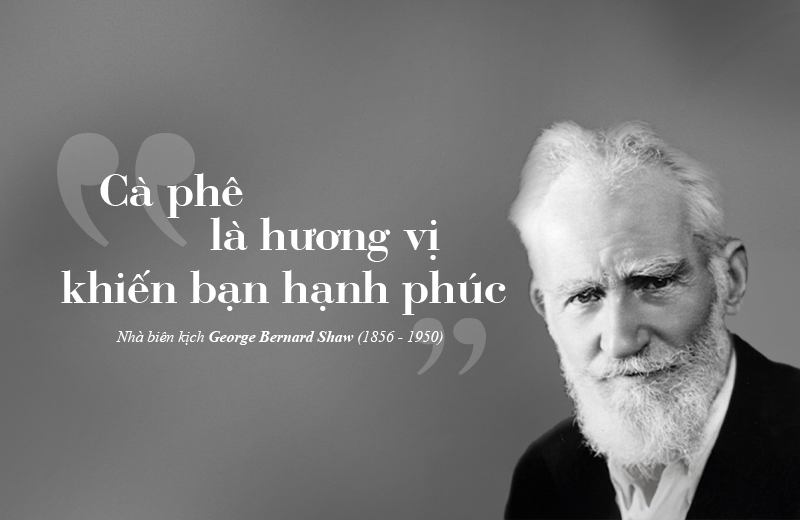
“Coffee is the kind of taste that makes you happy.” — George Bernard Shaw (1856–1950)
Coffee Shaping the Economy and National Identity
Since its introduction to Costa Rica in the late 18th century, coffee has steadily become a cornerstone of the nation’s economic growth, cultural identity, and community life. Over time, it evolved far beyond the role of a primary commodity, becoming a central force in the circulation of both material wealth and social-cultural values throughout Costa Rica’s history.
As the first country in Central America to cultivate coffee, Costa Rica possesses ideal natural conditions for producing exceptional beans: fertile volcanic soil, high elevations, and a tropical climate. Strong governmental support also encouraged the expansion of coffee farms and plantations, gradually replacing traditional crops. Coffee quickly became the country’s leading export, driving economic growth while laying the groundwork for democratic institutions and social welfare systems.
Between 1843 and 1880, coffee accounted for as much as 85–95% of Costa Rica’s export revenues. Beyond improving livelihoods and generating employment for thousands of workers, coffee exports also brought in the foreign capital needed to build vital infrastructure — including railways, schools, hospitals, and the National Theatre in San José. In this way, coffee became a critical link in Costa Rica’s national development journey.
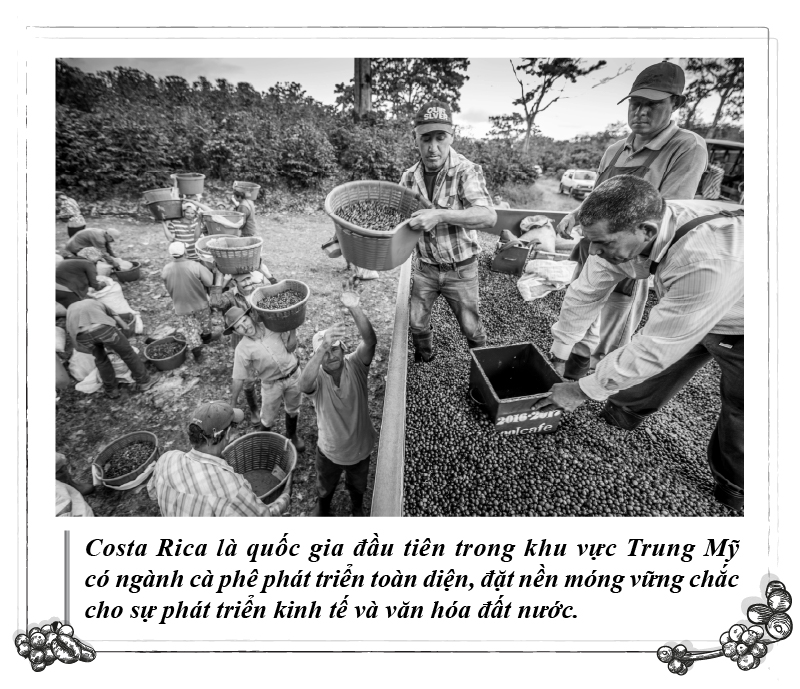
Costa Rica was the first nation in Central America to establish a fully developed coffee industry, creating a strong foundation for both economic and cultural advancement.
Yet coffee’s significance extends well beyond economics. Deeply woven into the country’s spiritual and social fabric, it has inspired many of the values that define Costa Rican society today. Locals affectionately refer to coffee as “el grano de oro” — “the golden bean” — in tribute to the crop that helped shape their national identity.
For centuries, coffee has symbolized hospitality, kinship, and community connection in Costa Rica. It is also inseparable from the spirit of Pura Vida — a philosophy centered on happiness, harmony, gratitude, compassion, and appreciating the present moment.
Welcoming guests with a cup of coffee is a cherished Costa Rican custom, expressing warmth and friendliness. The country also embraces la hora del café — “coffee hour” — typically enjoyed in the morning or afternoon, when family members, friends, or colleagues gather over coffee to converse and reconnect. These moments represent a pause in the day: a time for reflection, human connection, and savoring the present.
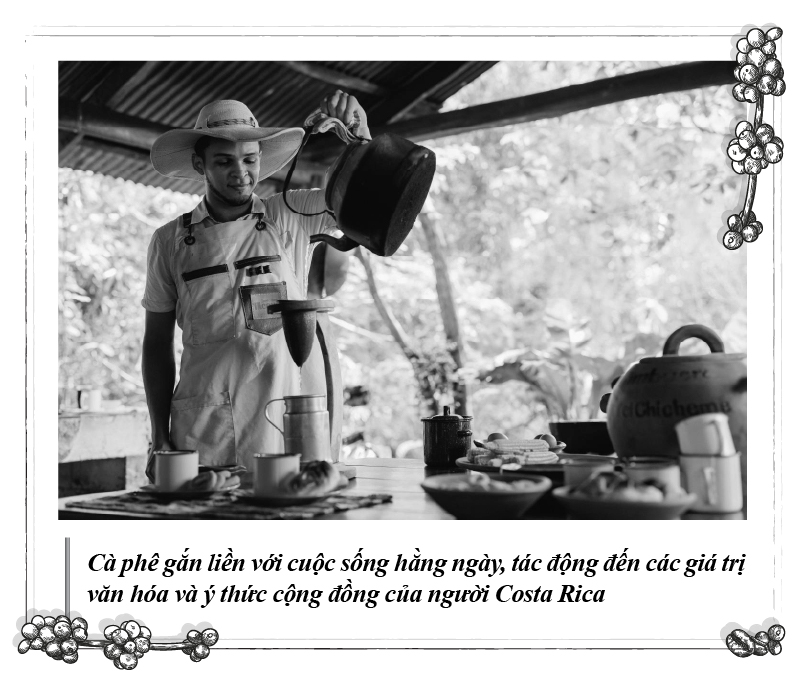
Coffee is intimately tied to everyday life, influencing both cultural values and communal consciousness in Costa Rica.
Recognizing its profound economic, social, and cultural importance, Costa Rica officially declared coffee a “National Symbol” in 2020. Coffee-related imagery — from coffee pickers and the traditional cloth coffee filter known as the chorreador to the iconic carreta típica coffee cart — has become deeply embedded in Costa Rican folk art, appearing in architecture, literature, music, and visual arts. Across the country, festivales del café celebrate coffee growers and traditional cultivation culture.
Most remarkably, Costa Rica has transformed coffee’s rich cultural and social legacy into a unique tourism asset. Coffee is now recognized not only as an agricultural product, but also as a catalyst for sustainable tourism and national development, helping position Costa Rica as one of Central America’s most distinctive destinations.
Coffee Tourism and the Path to Sustainable Prosperity
From its earliest days to the present, coffee has remained a pillar of Costa Rican life. The country’s transition from pure agricultural production to an integrated coffee tourism model — blending farming, cultural immersion, and experiential travel — reflects more than an economic shift. It represents a reimagining of the relationship between people, nature, and cultural identity. By balancing livelihoods, heritage preservation, and sustainable development, Costa Rica has placed people at the center of its national progress.
Drawing upon generations of accumulated expertise in cultivating high-quality coffee, Costa Rica has transformed coffee from a mere agricultural commodity into a distinctive tourism offering that elevates the nation’s culture, heritage, and traditional knowledge. Renowned coffee-growing regions such as Tarrazú, Valle Occidental, and Orosi Valley attract large numbers of visitors each year. Travelers can immerse themselves in a wide range of experiences — strolling through coffee plantations alongside local farmers, discovering the history of Costa Rican coffee, or even taking part directly in the coffee production process. Through these experiences, visitors gain a deeper appreciation of the Pura Vida philosophy by witnessing Costa Ricans’ pride in their coffee heritage, their commitment to sustainable labor, and the profound connections between people and nature, as well as among people themselves.
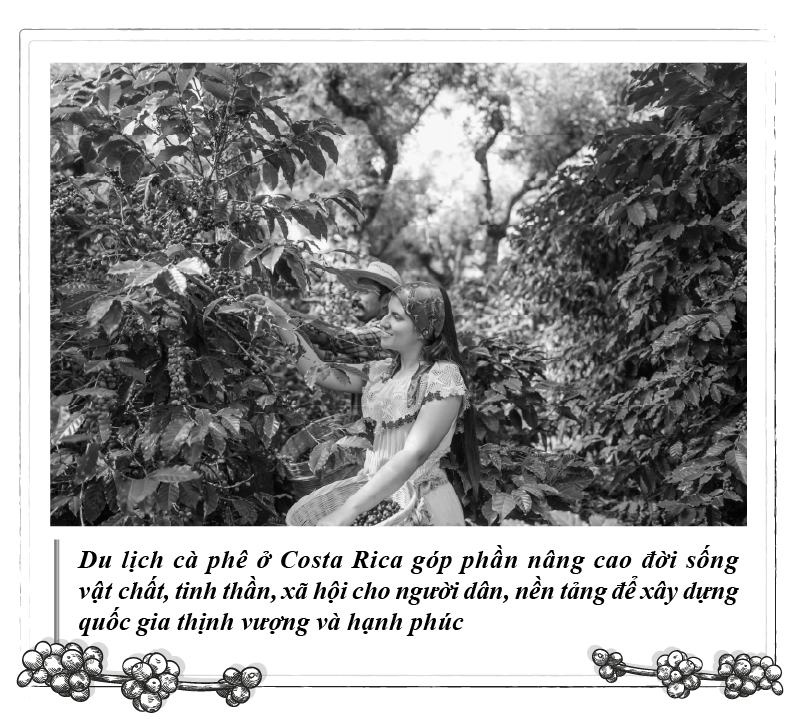
Coffee tourism in Costa Rica contributes not only to material prosperity, but also to social well-being and emotional fulfillment — key foundations for building a thriving and happy nation.
Beyond preserving and sharing cultural values, coffee tourism has become a long-term development strategy and a sustainable source of income for local communities. Rather than relying solely on fluctuating global coffee prices, production costs, or climate conditions, Costa Ricans have diversified their livelihoods through farm tours, cafés, artisanal coffee products, accommodations, and culinary services. Revenue generated from coffee tourism is reinvested into education, healthcare, and environmental protection, improving quality of life and fostering greater fulfillment and happiness.
At the same time, coffee tourism has strengthened public awareness of coffee cultivation as an agricultural heritage worth preserving. Many Costa Rican farmers have adopted more sustainable, environmentally responsible practices, including organic farming, biodiversity conservation, and careful soil and water management. The Costa Rican government has also introduced certification programs encouraging sustainable coffee production and helping farmers maximize their strengths. Costa Rica stands as a leading example of how culture, economy, and ecology can be integrated through green tourism development — balancing commercial growth with environmental stewardship.
Today, Costa Rica is widely regarded as one of the most sustainably developed countries in Central America, particularly in the areas of environmental protection, education, and quality of life. According to the World Happiness Report 2025, Costa Rica ranks sixth among the world’s happiest nations, further reinforcing its position as the happiest country in Latin America.
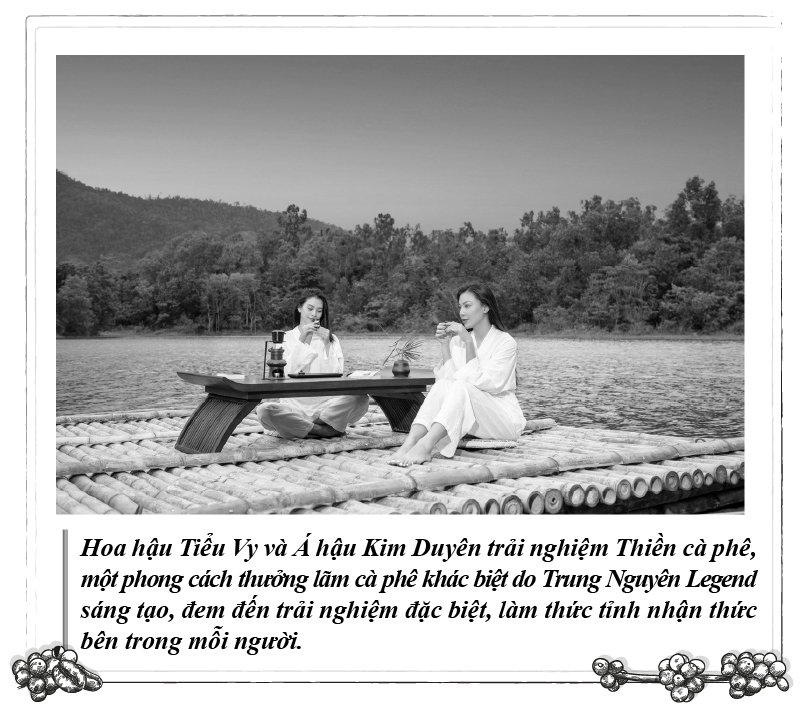
Miss Vietnam Tiểu Vy and First Runner-up Kim Duyên experience Coffee Meditation — a distinctive coffee appreciation practice created by Trung Nguyên Legend, offering a unique journey that awakens inner awareness within each individual.
Recognizing the immense potential and multidimensional value of coffee tourism — whose worth lies not only in the cultivation of coffee beans, but also in the preservation and elevation of cultural traditions, rituals, and community experiences into distinctive tourism offerings — many countries around the world have likewise pursued the transformation of coffee into a form of cultural and heritage capital. Countries such as Colombia, Ethiopia, and Brazil have developed coffee tourism models similar to Costa Rica’s, seeking to harmonize economic development with cultural preservation while enriching eco-tourism experiences.
In Vietnam — globally renowned as a leading center for robusta coffee production and export — Trung Nguyên Legend has created the Coffee Meditation Tour, a curated series of distinctive experiences in Buôn Ma Thuột, Đắk Lắk, the nation’s coffee capital. The journey invites visitors to immerse themselves in local culture and majestic natural landscapes while discovering the rich coffee heritage deeply rooted in Vietnam’s Central Highlands. More than a cultural exploration, the Coffee Meditation Tour is also a journey of inner awakening, offering renewed and abundant energy for the Body – Mind – Spirit of each traveler. As part of Trung Nguyên Legend’s unique and pioneering coffee ecosystem, this experience seeks to elevate coffee beyond the realm of an ordinary beverage toward the dimensions of cultural coffee, artistic coffee, spiritual coffee, and ultimately, philosophical coffee. Through this vision, Vietnamese coffee transcends the boundaries of an agricultural commodity to emerge as a cultural heritage of international stature.
Today, as a source of creative energy and mindful awareness — deeply interwoven with cultural life, social connection, and uniquely distinctive community experiences — coffee generates far more than economic value. It also plays a pivotal role in fostering prosperous, sustainable, and happy cultural and social development, thereby strengthening the global standing of many nations around the world.
Coming up: The Role of Coffee in the Development of the History Discipline