
ARTICLE 111: COCO CHANEL AND THE SPIRIT OF MODERN FASHION INNOVATION
European cafés were cultural environments that helped shape Coco Chanel’s aesthetic mindset, giving rise to a new standard of design for her era.
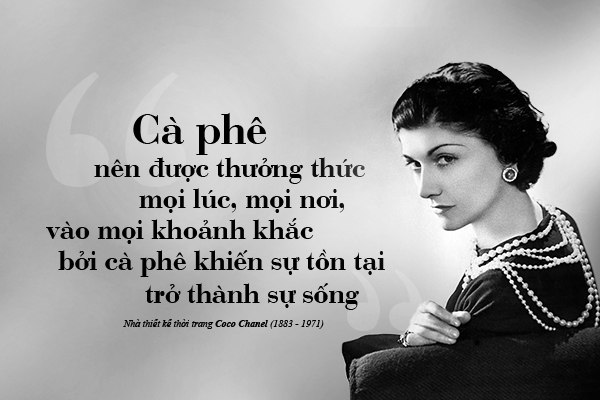
Coffee should be enjoyed anytime, anywhere, in every moment, for coffee turns mere existence into life. Fashion designer Coco Chanel (1883-1971)
A pioneer in defining the “elegant, free, and minimalist” style for women
At the beginning of the 20th century, amid the First World War and the surge of industrialization, the role of women in European society began to change. Women started taking the place of men—now sent to the battlefield—by joining the workforce, working in factories, offices, hospitals, and engaging in social activities such as voting and relief efforts. Their social position gradually transformed, reflecting a new image of modernity, independence, and self-determination. As a result, the restrictive fashion styles that made women “unable to walk quickly and always in need of assistance” became outdated and no longer represented their evolving role.
Born and raised in this transformative period, Coco Chanel (1883–1971), whose real name was Gabrielle Bonheur Chanel, became a pioneer who created and defined a “elegant, free, and minimalist” fashion style for women, leaving an enduring influence on the history of 20th-century fashion.
Through her life experiences, her ambition to rise above circumstances, and her bold, original creativity, Coco Chanel initiated and led a “fashion revolution” that liberated the female form in 20th-century France. She established a new standard for women’s fashion, “free and modern”, which became a timeless symbol of French elegance.
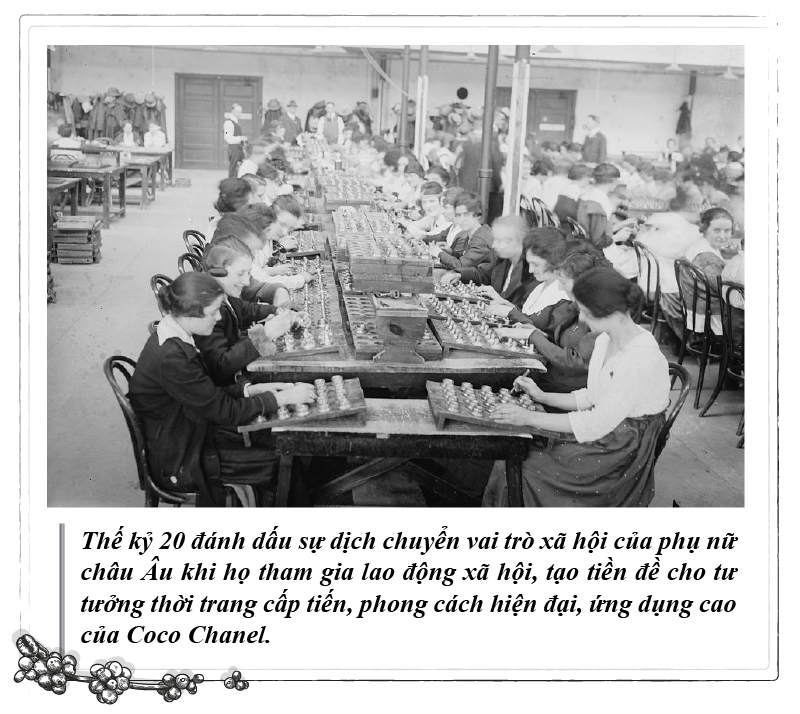
The 20th century marked a shift in the social role of European women as they entered the workforce, laying the foundation for Coco Chanel’s progressive fashion philosophy and her modern, highly practical style.
Born into a difficult childhood, Chanel lost her mother and was abandoned by her father at the age of 11. She grew up in a convent that also served as an orphanage, where she learned sewing. The austere environment and the nuns’ black-and-white attire helped shape both her resilient character and her minimalist fashion palette of Black – White – Beige that would later define her style.
At 18, after leaving the convent for Moulins, Chanel worked as a seamstress by day at Maison Grampayre and performed as a singer by night in local cafés such as Le Grand Café and La Rotonde. It was in these café settings that the nickname “Coco” was born, inspired by the songs she performed and the affection of her audience. More importantly, these very cafés became the places where Chanel first connected with members of the upper class, military officers, and the aristocracy—relationships that broadened her worldview, deepened her social awareness, and nurtured her groundbreaking aesthetic vision.
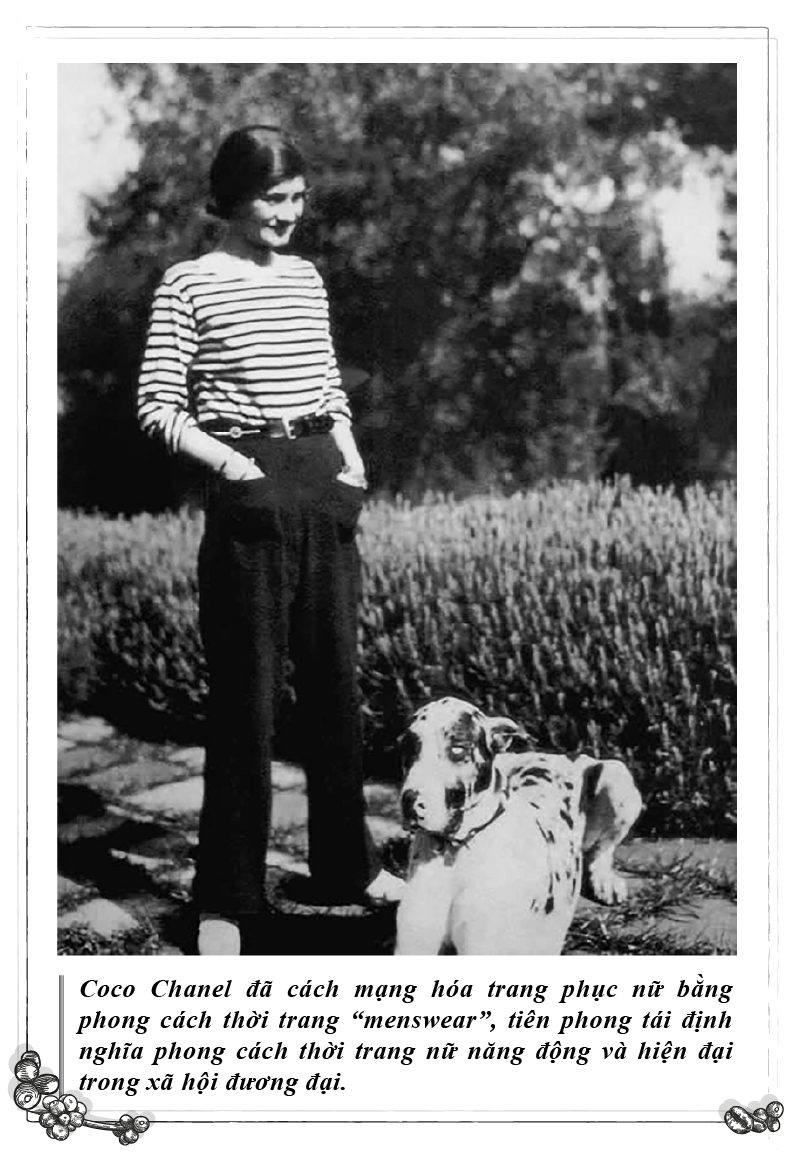
Coco Chanel revolutionized women’s fashion with her “menswear” style, pioneering a redefinition of women’s fashion that embodied dynamism and modernity in contemporary society.
When entering the world of fashion, Coco Chanel observed that the tightly corseted silhouettes and voluminous skirts of the time were “overly elaborate yet not at all alluring,” and ill-suited to the busy, modern lifestyles of women during wartime. She boldly replaced them with a more masculine-inspired “menswear” style for women: streamlined, comfortable in form, and highly practical.
Most notably, Chanel introduced women’s trousers around 1914, during World War I, a design considered “revolutionary”. It liberated the female body, allowing women greater ease of movement and the ability to work freely. This design gave rise to a new image of women—dynamic and independent—unlike anything seen before, contributing to the broader social transformation of women’s roles in the 20th century.
A fashion philosophy born from lifestyle
From the small cafés of Moulins to the elegant brasseries of Paris, such as Les Deux Magots, Café de Flore, La Closerie des Lilas, and La Rotonde, these meeting places of artists, intellectuals, and the middle and upper classes became a unique cultural environment. They deeply influenced Coco Chanel’s aesthetic sensibility and her creative approach to fashion.
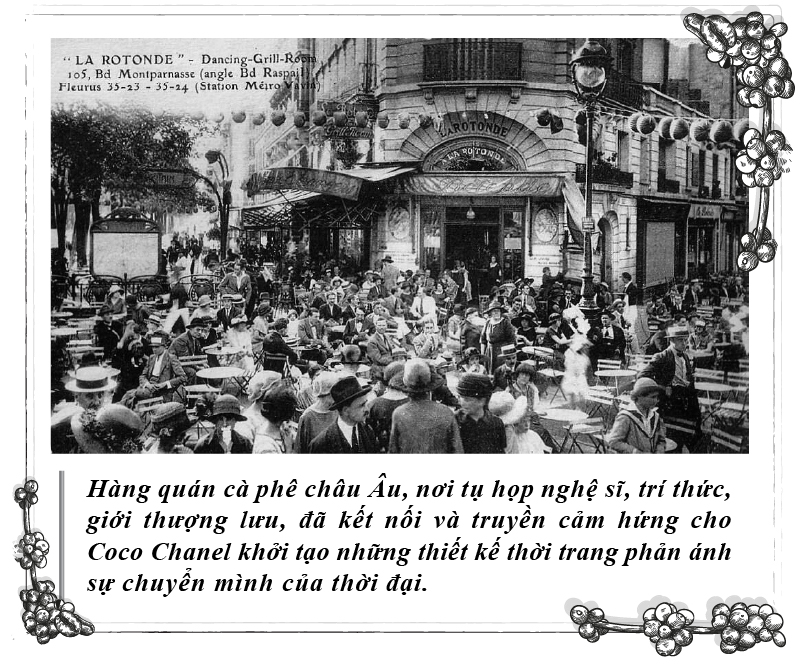
European cafés, gathering places for artists, intellectuals, and the upper class, became spaces that connected and inspired Coco Chanel to create fashion designs reflecting the transformation of her era.
In the café spaces filled with dialogue and creative energy, Coco Chanel’s conversations with leading artists such as poet Jean Cocteau, painter Pablo Picasso, and composer Igor Stravinsky broadened her artistic vision. The harmony between fashion, art, and the spirit of liberation that defined the era was masterfully reflected in her designs. Chanel pioneered the use of materials such as jersey and tweed, once reserved for men’s underwear and sportswear, to create women’s garments, sportswear, and suits that naturally accentuated the body’s lines while embodying elegance and freedom of movement.
Café Angelina on Rue de Rivoli was a favorite haunt of Coco Chanel and actress Audrey Hepburn. Amid its refined atmosphere of large mirrors and lively chatter, Chanel once remarked that she loved the feeling of “sitting and watching the ceaseless motion of life,” and that very “bustling rhythm” became a source of inspiration for her groundbreaking fashion creations.
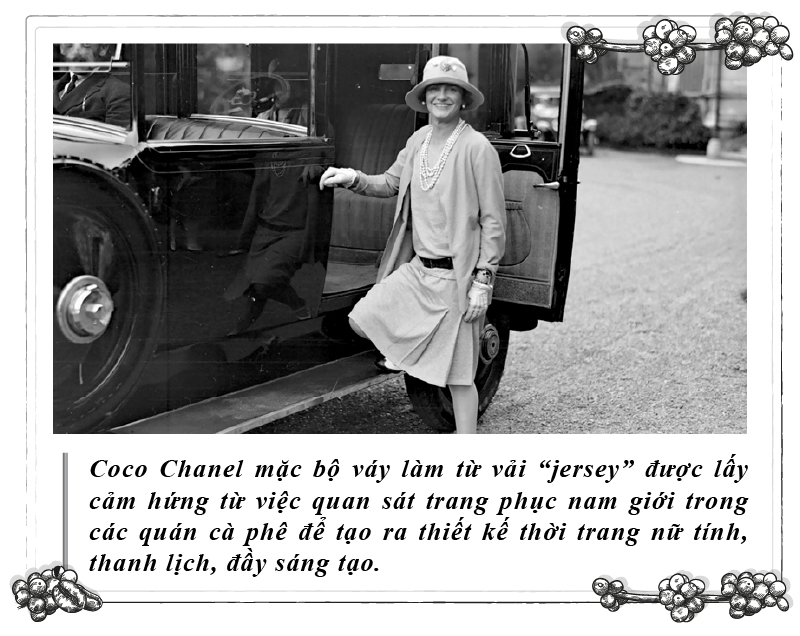
Coco Chanel wore a dress made from jersey fabric, inspired by her observations of men’s clothing in cafés, to create a fashion design that was feminine, elegant, and full of creativity.
Cafés were also where Chanel observed the quintessentially French flâneur lifestyle—the art of strolling, dressing beautifully, and savoring life over a cup of coffee. From this, she developed her fashion philosophy that “style begins with lifestyle.” One of the clearest expressions of this inspiration was her design of the Little Black Dress.
Before the 1960s, black was associated mainly with the working class and had never been considered suitable for high society attire. Yet, in her 1926 design of the Little Black Dress, Coco Chanel transformed black into an iconic color. The dress’s liberated, understated elegance was praised by Vogue magazine as “The Chanel Ford” — “the model for all women of taste.” It became the new standard of French feminine elegance, a timeless symbol that endures to this day.
Continuing the spirit of its founder, the dialogue between fashion and Parisian café culture remains a source of inspiration for the Chanel brand. In 2014, at the Biennale des Antiquaires in Paris, The House of Chanel introduced the jewelry collection Café Society, inspired by the golden age of Parisian cafés in the 1920s. The following year, at Paris Fashion Week 2015, Chanel captivated audiences once again with its Brasserie Gabrielle collection, an effortlessly chic showcase that recreated a lively Parisian café right on the Grand Palais runway.
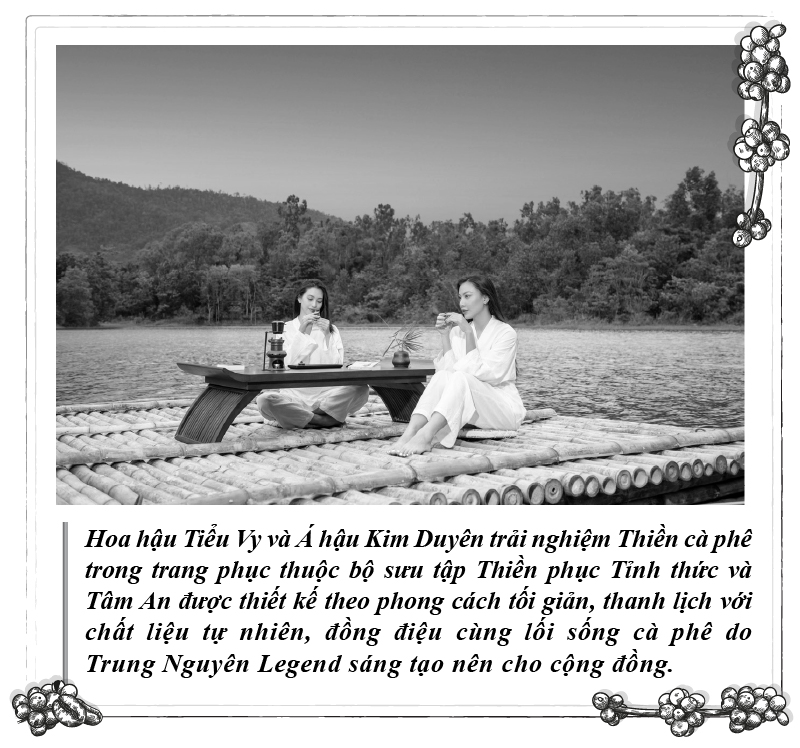
Miss Tiểu Vy and runner-up Kim Duyên experienced Coffee Meditation while wearing outfits from the “Thiền phục Tỉnh thức” (Awakening Attire) and “Tâm An” (Peaceful Mind) collections. These designs, created in a minimalist and elegant style using natural materials, harmonize with the coffee lifestyle concept developed by Trung Nguyên Legend for the community.
Throughout her creative journey, coffee and café culture became vital catalysts that fueled Coco Chanel’s inspiration and helped shape her fashion style and aesthetic philosophy, embodied in her belief that “Fashion is not something that exists only in dresses, but in the way we live.” In a world that constantly evolves, Chanel remains one of the most successful luxury fashion houses in existence today—a timeless symbol of elegance, where fashion, art, and lifestyle converge to create enduring values and inspire generations to come.
Coming up: Coffee and Sustainable Development