


Article 112: Coffee and Sustainable Development
With its profound influence on every aspect of human life, the coffee industry is increasingly being developed along a sustainable path, with the vision of becoming a solution for a harmonious and prosperous future for humanity.
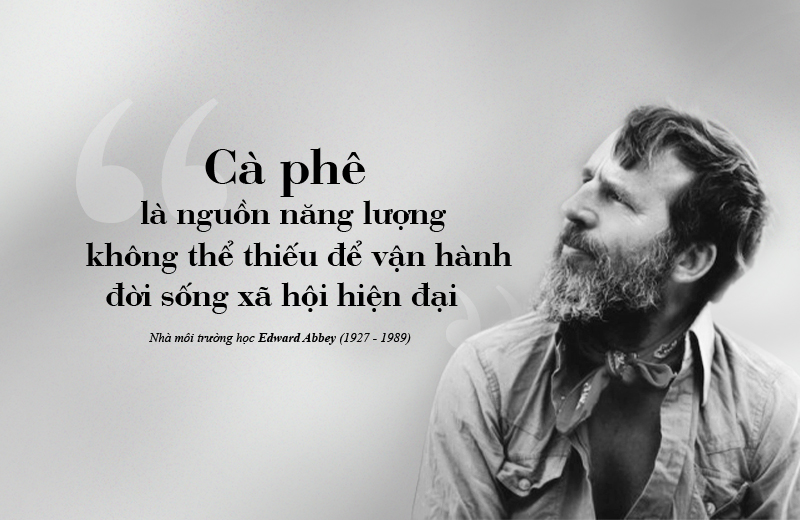
“Coffee is an indispensable source of energy that fuels modern social life.” – Environmentalist Edward Abbey (1927-1989)
The Coffee Industry’s Aspiration for a Sustainable Future
Since its emergence in the 9th century, coffee has remained one of the world’s most popular and beloved beverages. With its deep and far-reaching impact across all aspects of human life, driving economic growth, social well-being, and providing livelihoods for millions across producing, processing, distribution, and consumption sectors, coffee has truly become a global industry.
Alongside its immense value to humanity, the coffee industry has also long faced significant social and environmental challenges. Most of the world’s major coffee-growing regions, such as Brazil, Vietnam, Colombia, Ethiopia, and Jamaica, are home to some of the planet’s most climate-sensitive ecosystems. Since the 1970s, growing concerns about the sustainability of coffee production have arisen, centered on issues such as deforestation, soil erosion, loss of biodiversity, and the direct impacts on farmers from price volatility, pests, and climate change. These challenges laid the groundwork for the first fair trade initiatives, which focused on establishing minimum price standards and social support mechanisms to reduce the negative effects of market fluctuations.
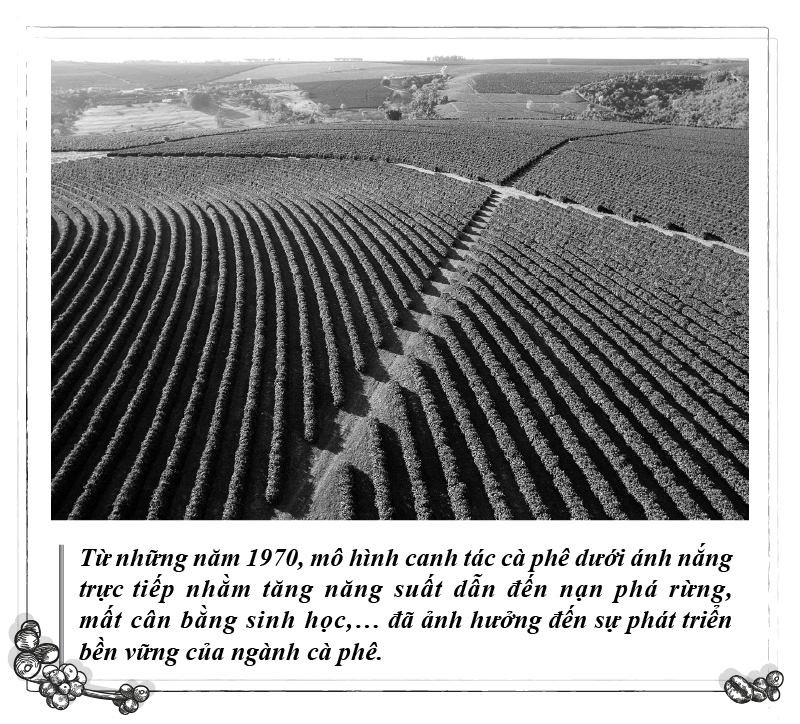
Since the 1970s, sun-grown coffee cultivation models, introduced to boost productivity, have led to deforestation, loss of biodiversity, and ecological imbalance, adversely affecting the sustainable development of the coffee industry.
During this period, sun-grown coffee – a monoculture farming method designed to boost yields by exposing coffee plants directly to sunlight instead of cultivating them traditionally under shade – began exerting pressure on the natural habitats of many species. This situation drew concern from environmental conservation organizations and the international community, sparking discourse around the concept of “sustainable coffee.” The goal was to transform a heavily exploitative industry into one capable of long-term viability and growth without undermining the ecological and social foundations on which it depends.
In 1987, the United Nations’ Brundtland Commission officially defined sustainable development as “development that meets the needs of the present without compromising the ability of future generations to meet their own needs,” based on three fundamental pillars: economic, social, and environmental. Following the global adoption of this definition, international organizations and coffee associations began formulating definitions specific to the coffee industry. Among them, the International Coffee Organization (ICO) proposed one of the most comprehensive and practical interpretations: “The sustainable development of the coffee sector encompasses all efforts to ensure the well-being and livelihoods of coffee farmers and producing communities (People); to establish fair economic systems, transparent markets, and stable global coffee supply chains (Prices & Profits); and to protect the environment and natural resources (Planet).”

Toward sustainable development, many major coffee-growing regions around the world have adopted intercropping models that integrate coffee cultivation within natural landscapes, thereby fostering biodiversity.
In the context of climate change, environmental challenges, and the rising global demand for coffee, sustainable development has become not just a trend but an inevitable path for the global coffee industry. It aims to build resilience, circularity, and regenerative capacity for the sector—laying the foundation for a truly sustainable future for coffee worldwide.
Sustainable farming models and standards being promoted include regenerative agriculture, organic farming, agroforestry, shade-grown coffee, water-saving practices, and the use of green technologies. At the same time, ensuring income equity and improving working conditions for farmers are emphasized as essential priorities. Sustainable coffee enterprises commit to transparency throughout the entire supply chain—from sourcing and production to consumption.
International certifications such as Rainforest Alliance, Fair Trade, UTZ Certified, and Organic Coffee exemplify the growing adoption of sustainable coffee models. These standards help create value-added coffee products that are environmentally responsible while promoting the industry’s sustainable development, contributing to ecological balance and enhancing human well-being.
“A Solution for a Harmonious and Sustainable Future” of Humanity
On the journey toward sustainable development, the global coffee industry has witnessed significant efforts from nations, businesses, organizations, and researchers who have introduced and implemented various initiatives and solutions to promote sustainability across the sector.
Some of the world’s largest coffee-producing countries, such as Brazil, Colombia, Ethiopia, India, Jamaica, and Vietnam, have actively adopted sustainable coffee models. In these regions, organizations like Rainforest Alliance, Fairtrade, and UTZ Certified have collaborated with local farmers to build environmentally responsible coffee value chains.
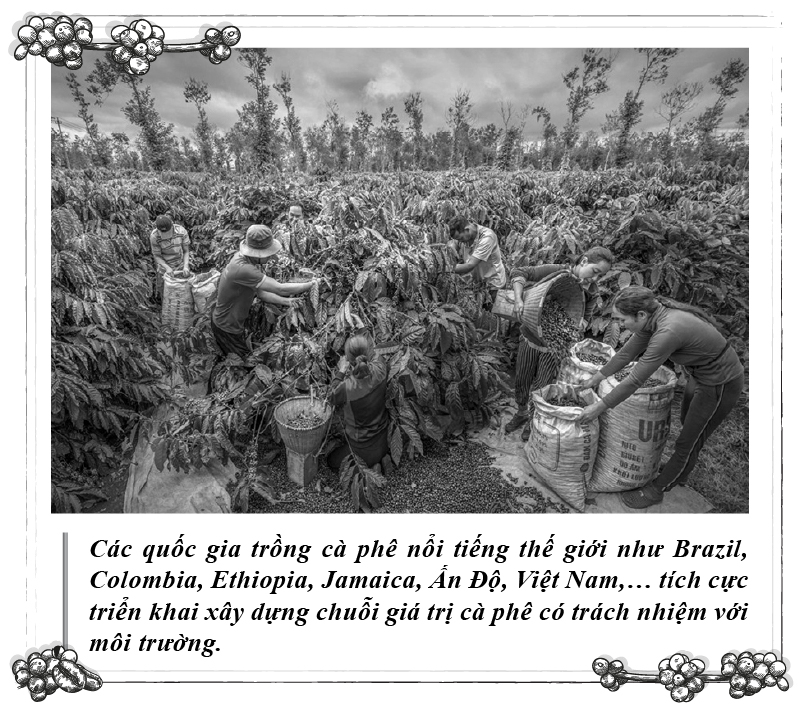
World-renowned coffee-producing countries such as Brazil, Colombia, Ethiopia, Jamaica, India, and Vietnam have been actively developing environmentally responsible coffee value chains.
In particular, alongside global efforts to promote sustainable coffee production, preserve the environment, and maintain biodiversity, numerous studies have shown that the coffee industry has the potential to become a true solution for a harmonious and prosperous future for humanity.
With a global vision, Trung Nguyên Legend has devoted many years to studying the history of coffee and its influence across all aspects of human life, with the goal of fundamentally and comprehensively rethinking the global coffee industry. In 2012, at the World Economic Forum (WEF), Đặng Lê Nguyên Vũ, Founder and Chairman of Trung Nguyên Legend Group, introduced the “Seven Initiatives for the Global Coffee Industry.” These initiatives were designed to foster synergy and healthy competition within the global coffee sector, encouraging sustainable development worldwide. The Seven Initiatives received enthusiastic support from experts across various disciplines around the world.
Among them, the initiative “Rethinking the Concept of Coffee” opened a new direction in the perception of coffee: not merely as the world’s most popular beverage, but as a heritage of humanity that influences every dimension of human life; as a source of awakening and creative energy. These values form the foundation for positioning coffee as a pioneering model of harmony and sustainable development within today’s green and creative economies. At the same time, they provide the basis for building and connecting a global community of coffee drinkers who see coffee as a responsible creative energy—one that drives lasting success and true happiness for individuals and society alike.

Miss Tiểu Vy and runner-up Kim Duyên experienced Coffee Meditation – a practice created by Trung Nguyên Legend to cultivate responsible creative energy, fostering lasting success and sustainable happiness for both individuals and the community.
For more than a decade, Trung Nguyên Legend has been dedicated to realizing its initiatives rooted in the vision of coffee as a cultural heritage aligned with the world’s evolving trends. By preserving and diversifying coffee cultures and styles, elevating robusta coffee along with Vietnamese coffee culture and branding on the global stage, and creating a model destination that gathers billions of coffee lovers around the world…, Trung Nguyên Legend has begun to connect and develop a global coffee community. These efforts contribute to advancing a sustainable development model for the world’s coffee industry—one that fosters balance, harmony, and prosperity.
Today, the movement toward sustainable coffee development represents a deeply humanistic and humane endeavor, building a collective force for responsible living that ensures ecological balance and harmony with the environment. In the creative economy, coffee, imbued with its unique energy, inspiring creativity, and capacity for regeneration, holds the potential to form a comprehensive coffee ecosystem. This ecosystem could serve as a pioneering model, leading the way toward a sustainable and prosperous global economy.
Coming up: Ecological Agriculture in the Sustainable Development of the Global Coffee Industry