


ARTICLE 118: COFFEEHOUSES — WHERE PEOPLE COME TO UNDERSTAND THEMSELVES AND SOCIETY
Coffeehouses are not only spaces where individuals gain deeper understanding of themselves, but also places that reflect the ever-evolving dynamics of society.
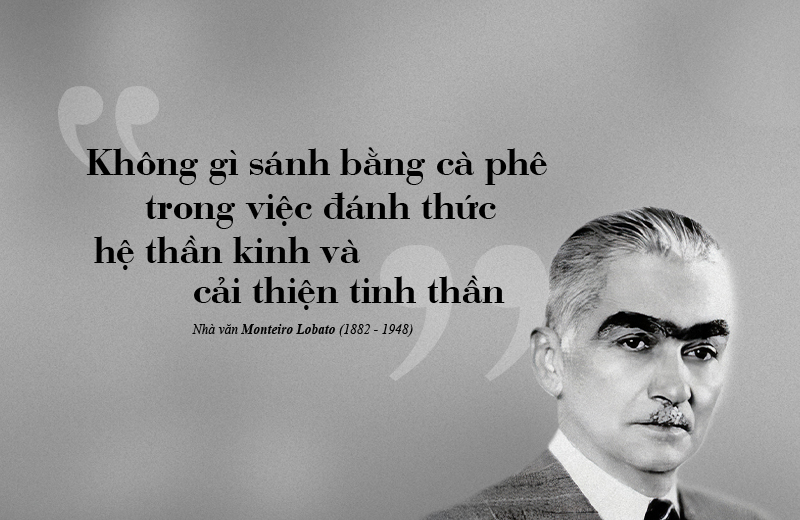
“Nothing compares to coffee in awakening the nervous system and uplifting the spirit.” — Writer Monteiro Lobato (1882–1948)
A Space for Self-Awareness and Personal Formation
In the 19th century, European society entered a profound crisis of consciousness. The weakening authority of religion, the rise of rational thought, and sweeping social upheavals placed humanity in a state of deep questioning about truth, morality, and the meaning of existence itself. People were compelled to confront themselves directly — to explore their own identity, responsibilities, and place within society. Individual consciousness became central to intellectual life, and each person was increasingly required to construct their own value system through reflection, choice, and action.
Within this context, coffeehouses — with their open atmosphere, welcoming nature, and freedom of debate — became trusted spaces for Europeans, especially intellectuals and individuals driven by independent thought, self-reflection, and the aspiration for personal growth. Iconic figures who embodied the spirit of their age, such as Pablo Picasso and Ernest Hemingway, spent countless hours in cafés observing life, engaging in conversation, and gradually shaping both their intellectual convictions and their distinctive creative identities.
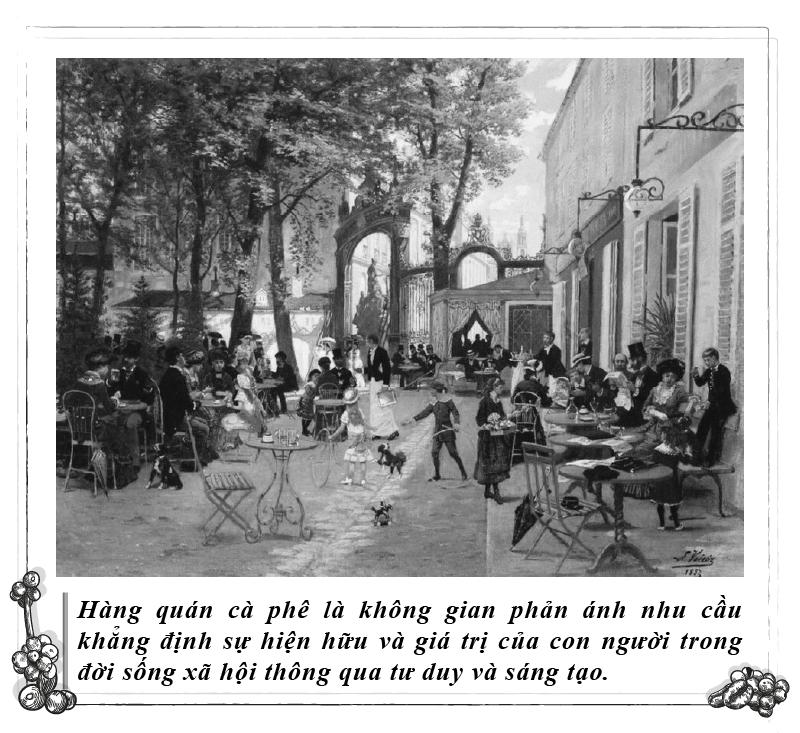
Coffeehouses became spaces that reflected humanity’s desire to affirm its existence and personal value within society through thought and creativity.
Within the space of the coffeehouse, intellectual and creative activity was no longer confined to the individual sphere. It became a setting where like-minded individuals could openly exchange ideas and perspectives, engaging in debate to build new intellectual foundations. Conversations unfolding over cups of coffee became a means through which ideas transcended the boundaries of theory and entered lived reality. Through presence, dialogue, and attentive listening, people gradually awakened to their own value, gaining deeper awareness of their role and place within a rapidly changing society.
Within this same environment, individual consciousness was no longer understood as something abstract, but rather as something shaped through lived experience and social interaction. By presenting ideas, engaging in debate, and embracing critical feedback, individuals were able to define their intellectual identity and sense of responsibility. From this process emerged a growing desire to participate in and contribute to collective social life, motivating individuals to continuously create new achievements in the realms of knowledge and creativity.
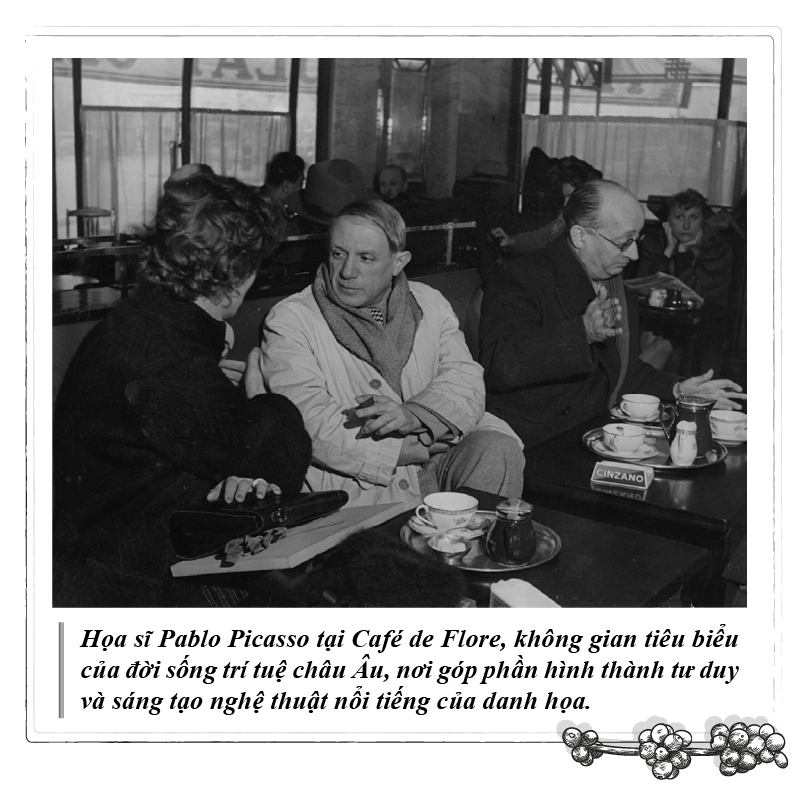
Painter Pablo Picasso at Café de Flore — an iconic space of European intellectual life that helped shape the legendary artist’s creative vision and artistic philosophy.
The 19th and 20th centuries are widely recognized as periods of extraordinary flourishing in science, philosophy, literature, and the arts — from the emergence of influential ideologies and avant-garde movements to scientific discoveries that transformed humanity’s understanding of the world and of itself. These achievements were not solely the result of individual effort; they were shaped within intellectual communities where ideas were shared, debated, and continuously tested through dialogue.
In this context, the role of coffeehouses extended far beyond serving as mere spaces for creative activity. They evolved into social environments where individuals not only shaped their own identities, but also came to recognize and engage with the structures and values underlying the societies in which they lived.
And as a Reflection of Society
In sociologist Erving Goffman’s theory of the “performance of identity,” presented in The Presentation of Self in Everyday Life, social life functions much like a stage upon which individuals continuously present themselves before others. Through interaction, people observe the reactions of the community and adjust their behavior, language, and demeanor according to the surrounding context, gradually forming and sustaining an identity recognized by society. This perspective suggests that personal identity is constantly constructed through everyday social interactions.
From this perspective, through the continuous practices of thinking and dialogue among individuals, the coffeehouse gradually transcended the boundaries of personal experience to become a distinctive social environment — a space where relationships, behaviors, and shared values were organized and sustained according to their own social dynamics. At the same time, coffeehouses generated concrete social values that enabled individuals to define their position, role, and sense of meaning within the fabric of human relationships.

A code of conduct displayed at Edward Stanford Coffee House — a representative example of the behavioral principles upheld in European coffeehouses, reflecting how these spaces functioned as environments governed by social norms and subtle forms of social order.
From the time coffeehouses first appeared in Europe, England published a pamphlet titled A Brief Description of the Excellent Vertues of that Sober and Wholesome Drink, Called Coffee, praising coffee as a drink of clarity and sobriety amid a culture dominated by beer and alcohol consumption. Included within it was the poem The Rules and Orders of the Coffee House, which outlined specific codes of conduct for behavior inside coffeehouses, such as: “gentlemen, merchants, all are welcome here,” “avoid all loud disputes,” “touch not sacred matters,” and “banish cards, dice, and all games of chance.”
As coffeehouses became an integral part of European social life, these principles continued to evolve flexibly according to different cultural contexts. This process helped reinforce the coffeehouse as a distinctive social institution — a space where intellectual activity was structured, dialogue was governed by shared norms, and social standards were gradually formed through everyday practice.
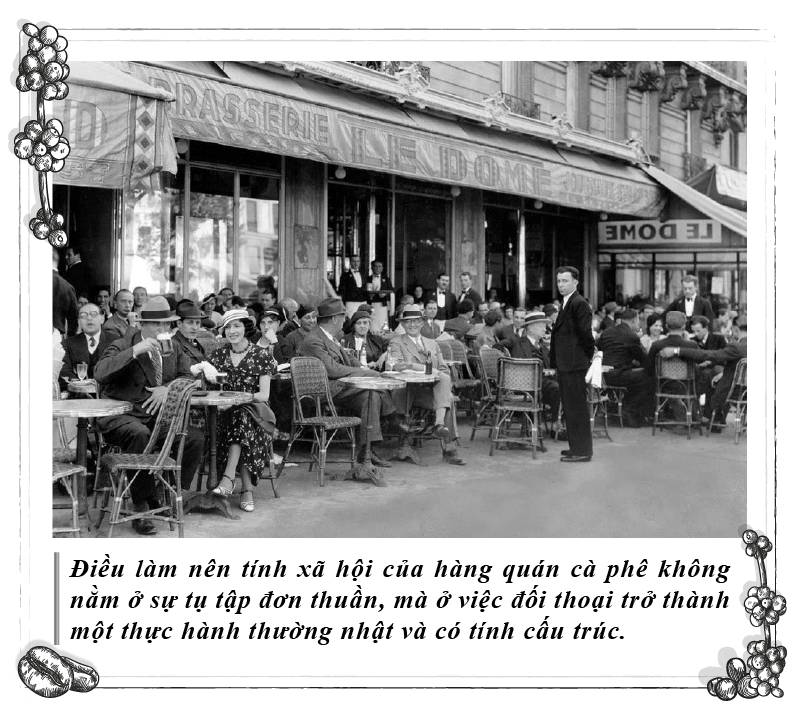
What gave coffeehouses their true social character was not merely the gathering of people, but the fact that dialogue itself became a structured and habitual social practice.
However, the role of coffeehouses extended far beyond merely reflecting social structures and interactions; they also actively participated in shaping social life itself. In Europe, coffeehouses became gathering places for intellectual communities and played a pivotal role in giving rise to influential movements and ideologies that profoundly impacted many aspects of society.
Most notably, coffeehouses also participated in the restructuring of social relationships through the principles of knowledge and rationality, contributing to the emergence of new ideas surrounding intellectual equality and the role of the individual within collective life. In doing so, coffeehouses became active forces in shaping patterns of thought and social relations, laying important foundations for the profound transformations that unfolded within Europe’s intellectual life during that era.
The coffeehouses of 17th-century England served as laboratories for great scientists such as Isaac Newton, William Whiston, and Francis Hauksbee. In 18th-century France, cafés such as Café Procope and Café de la Régence became gathering places where thinkers including Voltaire, Napoleon Bonaparte, Benjamin Franklin, Karl Marx, and Jean-Jacques Rousseau discussed and disseminated the core ideas of the Enlightenment. Meanwhile, cafés such as Café Jüngling, Zweites Kaffeehaus, and Erstes Kaffeehaus contributed to Vienna’s rise as the celebrated capital of European classical music. By the 20th century, the cafés of Montmartre had become gathering points for renowned painters such as Vincent van Gogh and Pablo Picasso, while also serving as “headquarters” for writers’ and poets’ circles that helped shape modern artistic life. Likewise, Café Central and Café Landtmann were prominent meeting places for Sigmund Freud and fellow psychoanalysts, where foundational theories of psychoanalysis were developed. These cafés also became spaces where writer Peter Altenberg and many Viennese intellectuals wrote, debated, and observed society, contributing significantly to the shaping of literary life.

Trung Nguyên Legend spaces have become “important social hubs” (according to the U.S.-based Financial Times), serving as gathering places for communities united by a passion for knowledge and intellectual exchange.
The functions and cultural, social values of coffeehouses have been affirmed not only through historical practice and academic research, but also at the institutional level. In 2011, UNESCO officially recognized the “Viennese coffee house culture” as an Intangible Cultural Heritage of Humanity, highlighting the role of coffeehouses as distinctive social spaces where intellectual dialogue, community interaction, and cultural values have been continuously cultivated and renewed across centuries.
In Vietnam, drawing upon extensive research into coffee culture, Trung Nguyên Legend has developed different – special – unique coffee spaces positioned as spaces of creativity and culture through models such as Trung Nguyên Legend World Coffee, Trung Nguyên Legend cafés, and Trung Nguyên E-Coffee. Alongside the “Life-Changing Foundation Bookshelf” — featuring more than 100 carefully selected books personally curated by Founder and Chairman of Trung Nguyên Legend Group Dang Le Nguyen Vu — the brand regularly organizes intellectual, cultural, and artistic exchange activities in collaboration with scholars and members of the intellectual community. These initiatives have led the Trung Nguyên Legend café system to be recognized as “important social hubs” by the U.S.-based Financial Times and as “creative cultural spaces” by the British Council. In the context of contemporary society, Trung Nguyên Legend can be seen as continuing and revitalizing the distinctive cultural and social functions historically associated with coffeehouses — closely connecting coffee with national cultural identity and intellectual life, while contributing to the creation of a new way of living: the Lifestyle of Coffee – the Lifestyle of Success – the Lifestyle of Awakenings.
Coming Next: The Social Significance of Coffee